'%3e%3cpath%20id='Vector'%20d='M0.775%206.60234L3.375%204.00234L0.775%201.40234'%20stroke='%23F2F2F2'%20stroke-linecap='round'%20stroke-linejoin='round'/%3e%3c/g%3e%3cdefs%3e%3cclipPath%20id='clip0_13602_6886'%3e%3crect%20width='4'%20height='6.4'%20fill='white'%20transform='matrix(-1%200%200%201%204.07812%200.800781)'/%3e%3c/clipPath%3e%3c/defs%3e%3c/svg%3e)
 10,537
Short answer: 1688 is usually cheaper at the listed product-price level, while Alibaba can be cheaper overall for a small first order or for a buyer without sourcing support in China. The correct comparison is not listing price versus listing price; it is the landed cost of the same specification, including payment, China delivery, agent service, inspection, export handling, freight, duty, tax and the cost of defects or delays.

Alibaba.com and 1688.com belong to the same corporate ecosystem but serve different markets. Alibaba.com is designed for international B2B trade; 1688 is primarily a Chinese domestic wholesale marketplace. That distinction explains most differences in language, payment, supplier behavior, export readiness and price.
Contents
1. Which platform is actually cheaper?
2. Alibaba vs 1688 at a glance
3. Why 1688 prices are often lower
4. How to calculate the real cost
5. Advantages and disadvantages
6. Which buyer should use each platform?
7. Which is better for importing?
8. Safe buying process
9. Mistakes and precautions
10. Frequently asked questions
11. Conclusion
12. Sources consulted
1. Which platform is actually cheaper?
Choose 1688 when the net product saving survives the extra operating costs. Choose Alibaba when convenience, export experience and documented order protection are worth more than the apparent unit-price gap.
A practical break-even calculation is:
Break-even units = extra fixed cost of buying through 1688 ÷ saving per acceptable unit.
Example: the same specification costs US$2.40 on Alibaba and the equivalent 1688 item costs US$1.90. The apparent saving is US$0.50. If payment, local receiving, consolidation and inspection add US$180 beyond the Alibaba route, the break-even point is 360 acceptable units. Below that volume Alibaba is cheaper in this simplified example; above it 1688 may win. Add the agent’s percentage fee, rework and defect allowance before deciding.
This is a decision model, not a market-wide price promise. Two similar photos may hide different materials, thickness, tolerances, packaging, certification or quality grade.
2. Alibaba vs 1688 at a glance
| Criterion | Alibaba.com | 1688.com |
|---|---|---|
| Primary market | International B2B buyers | China domestic wholesale |
| Typical display language | International, including English | Mainly simplified Chinese |
| Currency and payment | Cross-border methods and currencies vary by country/order | Domestic China payment environment; overseas buyers often need assistance |
| Listed unit price | Often higher because export-facing service is built into the commercial model | Often lower for standard domestic-market goods |
| MOQ | Supplier- and customization-dependent | Often flexible for ready stock, but not universally low |
| Export documents | Many suppliers are familiar with them | Seller may only deliver domestically and may not be the exporter of record |
| Order protection | Trade Assurance applies when the eligible order is placed and paid through Alibaba and terms are documented | Do not assume Alibaba.com Trade Assurance applies to a 1688 order |
| Best fit | Beginners, OEM projects, direct international negotiation | Experienced buyers, multi-SKU consolidation, buyers with China operations |
3. Why 1688 prices are often lower
1688 suppliers compete for domestic buyers in renminbi and usually quote delivery within China. Their offer may exclude export packaging, English-speaking sales staff, international payment handling, foreign compliance work and export coordination. Alibaba suppliers commonly budget for some of those activities.
1688 also exposes a deep layer of manufacturers, wholesalers and stock sellers serving China’s retail supply chain. However, a low price does not prove that a seller is a factory. Both marketplaces include manufacturers and intermediaries; business-license scope, factory address, production evidence, sample consistency and an audit matter more than the label displayed on a profile.
Price tiers can also mislead. Confirm whether the displayed figure applies to the selected color, size, material and quantity, whether tax is included, and whether it is a sample, deposit or promotional SKU.
4. How to calculate the real cost

Use one spreadsheet and one Incoterm basis. A useful formula is:
Landed cost per saleable unit = (goods + molds/setup + packaging + China freight + agent/payment + inspection/rework + export handling + international freight + insurance + duty + import tax + brokerage + destination charges) ÷ saleable units.
“Saleable units” matters. If 3% of a batch is defective, allocating cost across ordered units understates the real cost. Compare suppliers using the same AQL inspection plan, defect assumption and exchange-rate date.
A same-scope RFQ checklist
Send both suppliers the same specification sheet: material and grade, dimensions and tolerances, color reference, logo method, unit packaging, carton standard, quantity by SKU, compliance documents, sample requirement, inspection criteria, Incoterm and destination. Ask them to separate tooling, product, packaging, domestic freight and export charges. A vague “best price?” request cannot generate a reliable comparison.
5. Advantages and disadvantages
Alibaba advantages
- International-facing communication and payment options.
- Many suppliers can quote export terms, customization and compliance documents.
- Trade Assurance can support disputes when specifications, ship date and payment remain within the protected online order.
- RFQ tools make initial supplier comparison convenient.
Alibaba disadvantages
- Export-facing overhead and intermediary margins may raise the price.
- Supplier badges do not replace due diligence or inspection.
- Quoted MOQ and price may change after specifications are clarified.
- Protection is not a blanket quality guarantee; the written order is the evidence.
1688 advantages
- Strong access to China’s domestic wholesale assortment and price competition.
- Useful for ready-stock items, components, packaging and multiple SKUs.
- Can produce meaningful savings at repeat or consolidated volume.
- Chinese keywords and image search can reveal suppliers absent from export platforms.
1688 disadvantages
- Language, RMB payment, local receiving and after-sales communication create friction.
- Many sellers are not prepared to export or supply destination-market documents.
- An agent, China warehouse or exporter may add cost and another contractual party.
- Domestic packaging or specifications may be unsuitable for international transit or local regulation.
6. Which buyer should use each platform?
Alibaba is generally better for: a first commercial order; a buyer who works in English; customized or regulated goods requiring export documentation; a company wanting to negotiate directly with an export-ready supplier; and a small test batch where fixed agent and consolidation costs would erase the 1688 saving.
1688 is generally better for: an experienced importer with a trusted China-side operator; repeat orders with stable specifications; a retailer consolidating many ready-stock SKUs; price-sensitive, relatively simple goods; and buyers able to inspect before export.
A hybrid approach often wins: use Alibaba to learn export requirements and develop a complex product, while benchmarking components, packaging or mature repeat SKUs on 1688. Do not move a proven SKU solely because another listing looks cheaper; revalidate the factory, sample and quality standard.
7. Which is better for importing?
Alibaba is structurally easier for direct international importing. Many sellers understand commercial invoices, packing lists, HS-code discussions, Incoterms and international freight. 1688 is a sourcing channel; it is not automatically a complete export solution.
For 1688, define who will be the contracting seller, who receives RMB, who receives and inspects goods in China, who consolidates cartons, who acts as exporter, and who handles claims. If those roles are split, keep purchase orders, warehouse receipts, inspection evidence and payment records connected.
Latin American buyers who want access to Chinese sourcing with Spanish-language coordination can evaluate Chilat Shop for product sourcing and import support. Its suitability still depends on product, order value, destination and service quotation; compare its full scope against buying directly.
8. Safe buying process
- Define the destination requirement first. Check classification, labeling, safety standards, permits and intellectual-property risk before sourcing.
- Create a measurable specification. Include approved sample, tolerances, packaging and defect limits.
- Shortlist three to five suppliers. Verify legal identity, business scope, address, years operating, production evidence and export capability.
- Order samples. Label each sample and record which supplier and specification it represents.
- Compare landed-cost scenarios. Request equal quantity and Incoterm bases.
- Write the contract/order. Define milestones, acceptance criteria, remedies and authorized payment recipient.
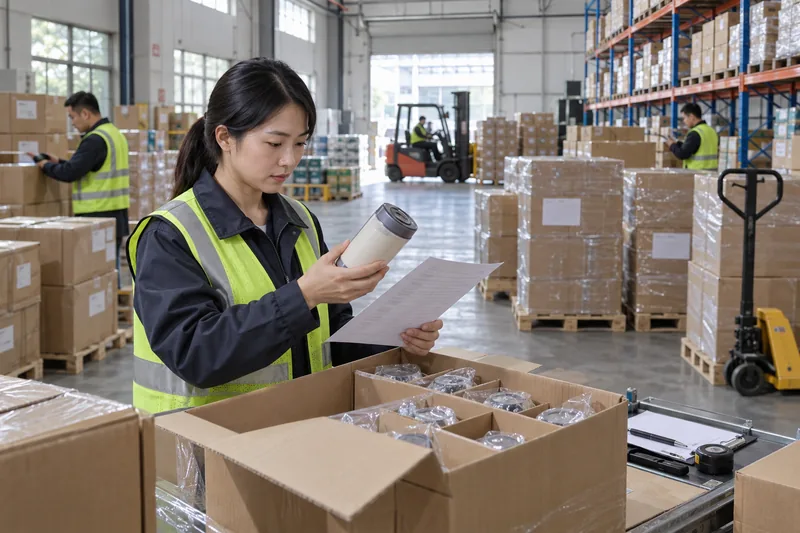
- Inspect before final payment or export. Match the inspection plan to product risk and batch size.
- Consolidate and ship. Recheck carton dimensions, weight, marks and documents before booking.
- Measure actual cost. Record defects, delays, destination charges and saleable yield for the reorder decision.
For additional operational detail, see Chilat’s 1688 English buying guide and its broader guide to choosing an app for a first China import.
9. Mistakes and precautions
- Comparing photos instead of specifications: match material, weight, grade, accessories and packaging.
- Paying outside the protected channel: on Alibaba, protection depends on an eligible online order and compliant payment; never assume an off-platform transfer is covered.
- Treating badges as guarantees: verify the company and inspect the goods.
- Ignoring exportability: batteries, cosmetics, medical items, food-contact goods, branded products and wireless electronics may require extra documents or face shipping restrictions.
- Underestimating volumetric freight: cheap bulky goods can have an unattractive landed cost.
- Letting an agent hide supplier identity or markups: obtain a written fee schedule, service scope, claim process and, when appropriate, original supplier evidence.
- Ordering too many SKUs too early: each additional model increases sample, receiving, labeling and inventory complexity.
10. Frequently asked questions
Is 1688 always cheaper than Alibaba?
No. It often has a lower listing price, but a small order can become more expensive after agent minimums, domestic freight, inspection, consolidation and export handling.
Can foreigners buy directly from 1688?
Access and payment capability vary, and many sellers only support China-side payment and delivery. Even when checkout is technically possible, an overseas buyer may still need a warehouse, exporter and after-sales contact in China.
Does 1688 have lower MOQs?
Ready-stock listings may allow small quantities, but MOQ depends on supplier, SKU mix, customization and production method. Low trial quantity does not mean low OEM MOQ.
Is Alibaba safer?
It provides international payment and Trade Assurance mechanisms, but safety depends on documenting the exact specification and deadline, paying through the eligible order and preserving evidence. Inspection remains advisable.
Should I use a sourcing agent for 1688?
Usually yes if you cannot communicate, pay, receive, inspect and export within China. Compare the agent’s total fee and responsibilities, not only the commission percentage.
Can I find the same factory on both platforms?
Sometimes. Verify the Chinese legal company name, unified social credit code, address and bank-account beneficiary; similar photos or an English trade name are not enough.
11. Conclusion
1688 is usually the lower-price sourcing market; Alibaba is usually the easier import transaction. For a beginner or a small test order, Alibaba’s international workflow may make it cheaper overall. For a repeat buyer with China-side purchasing, inspection and consolidation, 1688 can reduce unit cost materially. Run a same-specification landed-cost comparison and choose the route with the lowest cost per acceptable, compliant unit—not the smallest number on the screen.
12. Sources consulted