'%3e%3cpath%20id='Vector'%20d='M0.775%206.60234L3.375%204.00234L0.775%201.40234'%20stroke='%23F2F2F2'%20stroke-linecap='round'%20stroke-linejoin='round'/%3e%3c/g%3e%3cdefs%3e%3cclipPath%20id='clip0_13602_6886'%3e%3crect%20width='4'%20height='6.4'%20fill='white'%20transform='matrix(-1%200%200%201%204.07812%200.800781)'/%3e%3c/clipPath%3e%3c/defs%3e%3c/svg%3e)
 10,418
Alibaba.com is the best all-around Chinese wholesale website for most first-time international importers, but it is not the best in every situation. Choose 1688 for domestic-China pricing when you have local operating support; Made-in-China for industrial and specification-driven sourcing; Global Sources for professionally screened export suppliers and trade-show follow-up; and DHgate for small test orders.
The “best” platform is the one that produces the lowest cost per compliant, saleable unit—not the lowest number on a listing. Product price, minimum order quantity (MOQ), supplier verification, sample cost, inspection, export documents, freight, duty, defects and the time required to solve problems all affect the result.

Contents
1. Which website is best?
2. Five-site comparison
3. Alibaba.com
4. 1688.com
5. Made-in-China.com
6. Global Sources
7. DHgate
8. How to choose by buyer profile
9. How to buy safely
10. Import process
11. Quality control
12. How to compare real prices
13. Precautions
14. Frequently asked questions
15. Conclusion
16. Sources consulted
1. Which Chinese wholesale website is best?
Best overall for a new international B2B buyer: Alibaba.com. It combines a broad supplier base, international communication, RFQ tools, several payment methods and Trade Assurance for eligible orders placed and paid through its system. However, it still requires supplier due diligence and a measurable purchase order.
Best apparent product price: 1688. It serves China’s domestic wholesale market, so quotations often exclude international sales and export work. An overseas buyer may need an agent, RMB payment, a China warehouse, inspection, consolidation and an exporter.
Best for machinery and technical categories: Made-in-China. Best for verified export suppliers plus face-to-face sourcing: Global Sources. Best for low-volume validation: DHgate.
2. Five Chinese wholesale websites compared
| Platform | Main products | Price position | Typical order profile | After-sales mechanism | Best for |
|---|---|---|---|---|---|
| Alibaba.com | Consumer goods, packaging, textiles, electronics, machinery, OEM | Medium; export-facing | Samples to container orders; MOQ varies | Trade Assurance on eligible documented orders | First-time and experienced international B2B buyers |
| 1688.com | Very broad Chinese domestic wholesale assortment | Often low at source | Stock lots, components, multi-SKU buying, factory orders | Domestic-platform process; overseas claims usually need China-side handling | Experienced buyers with an agent or China team |
| Made-in-China.com | Machinery, industrial equipment, hardware, electrical and consumer goods | Medium; quotation-led | Technical B2B and OEM | Secured Trading Service where available and used | Specification-driven industrial sourcing |
| Global Sources | Electronics, mobile accessories, home, lifestyle, fashion and export products | Medium to high | Professional wholesale and larger OEM programs | Supplier verification tools; commercial disputes remain contract-dependent | Established importers and trade-show buyers |
| DHgate | Fashion accessories, electronics accessories, beauty, gifts and general merchandise | Low to medium, usually small-lot oriented | Pieces, samples and small wholesale batches | Platform dispute/refund process subject to evidence and timing | Testing demand before a larger B2B order |
“Price position” is relative, not a promise. A 1688 product can become more expensive after agent minimums and consolidation; an Alibaba or Made-in-China supplier may quote a higher unit price that already includes export packing or documentation.
3. Alibaba.com: best all-around starting point
Alibaba.com is an international B2B marketplace covering ready-to-ship goods, wholesale and custom manufacturing. It works well for apparel, packaging, home goods, beauty, electronics, parts and machinery because buyers can search suppliers, send inquiries or issue a request for quotation (RFQ).
Advantages: broad selection; English and other international languages; export-oriented sales teams; OEM/private-label negotiation; multiple payment routes; and Trade Assurance for qualifying online transactions. Alibaba’s own buyer guidance says protection depends on the online order, documented quality/ship-date terms and payment through the supported route.
Disadvantages: search results mix factories, trading companies and wholesalers; sponsored visibility and badges do not prove suitability; export-facing prices can exceed domestic-China prices; and dispute outcomes depend heavily on the written specification and evidence.
After-sales: keep specifications, messages, change approvals and payment inside the protected order. A phrase such as “good quality” is difficult to enforce; define material grade, dimensions, tolerances, performance, packaging and defect limits.
Suitable for: a first commercial import, customized goods, buyers communicating in English and companies that can manage supplier comparison and inspection. Not ideal for: buyers assuming Trade Assurance replaces pre-shipment quality control.
4. 1688.com: best access to domestic wholesale pricing
Alibaba Group describes 1688 as a leading integrated domestic wholesale marketplace in China. It contains factories, distributors and stock sellers serving Chinese retailers and businesses. Clothing, accessories, household products, packaging, components, beauty tools and small commodities are especially deep categories.
Advantages: strong domestic competition, extensive assortment, useful image search and often flexible ready-stock quantities. It can reduce sourcing cost for repeat items and orders consolidated from several vendors.
Disadvantages: mainly Chinese-language operations, RMB payment friction, domestic delivery, uneven export experience and the need to coordinate receipt, inspection, consolidation and export. The lowest tier price may apply only to a large quantity or a basic variant.
After-sales: claims usually require fast Chinese communication, local return logistics and evidence before goods leave China. Do not assume Alibaba.com Trade Assurance covers a 1688 purchase.
Suitable for: experienced importers with a reliable agent, employee or warehouse in China. Not ideal for: a beginner ordering one SKU when fixed service costs erase the saving. Chilat’s guide to buying on 1688 from Latin America explains the operational barriers in more detail.
5. Made-in-China.com: best for industrial sourcing
Made-in-China is a B2B directory and transaction platform with strong coverage of machinery, tools, electrical equipment, building materials, industrial components and technical products, alongside consumer categories.
Advantages: manufacturing-oriented filters, RFQ capability, Audited Supplier reports and a Secured Trading Service for applicable orders. Detailed audit reports can help buyers understand legal registration, production and QC capacity.
Disadvantages: many products require formal quotation; MOQs and prices may be higher than small-lot sites; and an audit report verifies specified facts at a point in time—it does not guarantee your order.
After-sales: use the platform’s secured service when eligible, but attach technical drawings, standards, acceptance tests, spare-parts obligations and commissioning scope to the contract. Suitable for: engineers, distributors and importers who already know the required specifications.
6. Global Sources: best online-to-offline supplier discovery
Global Sources combines an online B2B platform, supplier verification, business matching and trade shows. It is particularly visible in consumer electronics, mobile accessories, home/lifestyle products and export-ready innovation.
Advantages: Verified Supplier and Verified Manufacturer filters; optional supplier capability assessments; and opportunities to meet exhibitors in person. Its official explanation distinguishes registration verification from deeper onsite capability assessment.
Disadvantages: the pool can be smaller than Alibaba in broad commodity categories; suppliers often target professional, higher-volume buyers; and Global Sources states it may remove proven fraudulent listings but does not adjudicate ordinary commercial disputes between buyer and supplier.
After-sales: protection depends primarily on your supplier contract, payment structure, inspection and applicable transaction tools. Suitable for: established brands, electronics importers and buyers who will combine online screening with Hong Kong trade shows or factory visits.
7. DHgate: best for small wholesale tests
DHgate sits closer to cross-border marketplace purchasing than factory-development sourcing. It is useful for fashion accessories, gifts, beauty accessories, electronic accessories and other ready-made products sold in smaller quantities.
Advantages: low entry quantity on many listings, straightforward checkout and direct shipping options. Buyers can validate demand, order samples or compare several products without committing to factory-scale MOQ.
Disadvantages: unit prices are normally less attractive at scale; sellers may be resellers rather than manufacturers; complex OEM control is limited; return freight can make an international refund uneconomic; and branded goods carry counterfeit risk.
After-sales: DHgate provides a Return & Refund dispute route and escalation, subject to order status, deadlines and evidence. Its help center says the seller remains the product-service provider. Suitable for: microbusinesses and product validation. Not ideal for: custom tooling or a controlled long-term supply chain.
8. Which platform fits your buyer profile?

- First import, one customized product: start with Alibaba and compare at least three qualified suppliers.
- Repeat stock goods or many SKUs: consider 1688 when a China-side team can receive and consolidate.
- Machinery, tools or engineered parts: compare Made-in-China and Alibaba using the same technical RFQ.
- Electronics brand with trade-show budget: combine Global Sources screening, meetings and factory audits.
- Testing 5–50 ready-made units: DHgate may be more practical than negotiating an OEM order.
- Latin American multiproduct wholesaler wanting Spanish support: evaluate Chilat Shop for sourcing and consolidated importing, then compare its quoted service scope and landed cost with direct buying.
9. How to buy from a Chinese wholesale website
- Define the product: material, dimensions, function, packaging, destination compliance and acceptable defects.
- Search in two ways: product keywords and supplier/manufacturer filters. Reverse-image search is discovery, not verification.
- Shortlist three to five suppliers: compare legal identity, business scope, years operating, production evidence, audit information and relevant export history.
- Send one standardized RFQ: quantity by SKU, target specification, customization, certificates, Incoterm, destination and delivery date.
- Order and test samples: label every sample and record its exact supplier/version.
- Verify the company: match the contract name, license, bank beneficiary and factory address.
- Negotiate terms: price tiers, MOQ, tooling ownership, production time, inspection, remedy and payment milestones.
- Place a documented order: use the relevant platform protection where available and never rely only on chat promises.
10. Import process from China
Before paying production, confirm whether the product is legally importable in the destination and identify its HS classification, labeling, permits, testing, intellectual-property risk and estimated duty/tax. Then choose an Incoterm and separate supplier responsibilities from those of the freight forwarder and customs broker.
- Approve sample and specification.
- Sign order/contract and pay the agreed deposit through the controlled channel.
- Monitor production milestones.
- Inspect before balance payment or shipment.
- Consolidate suppliers when the savings exceed extra handling risk.
- Verify commercial invoice, packing list, transport document, origin and required certificates.
- Book air, courier, LCL or FCL based on chargeable weight, urgency and risk.
- Clear customs, receive goods, count damage/defects and calculate actual landed cost.
11. Quality control: the website is not the inspector
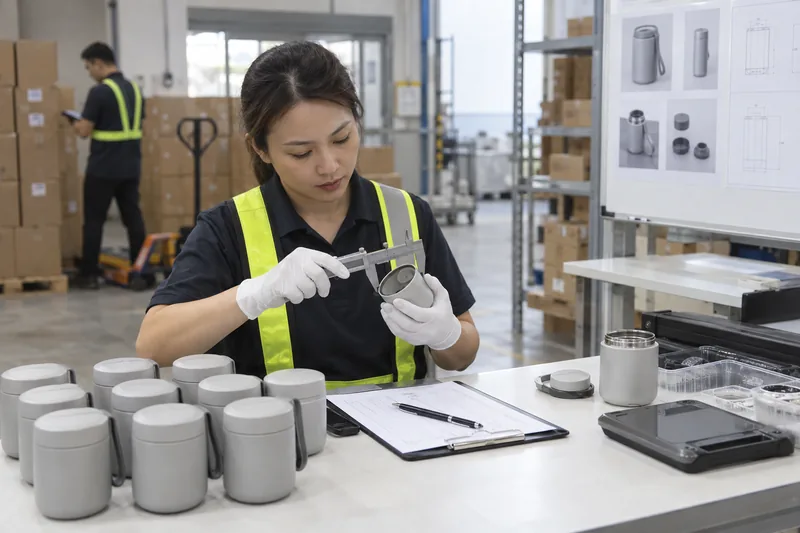
A verified profile reduces one type of uncertainty; it does not prove that the next production lot meets your specification. Use a risk-based plan:
- Before order: sample, certificate validation and, for material projects, factory audit.
- During production: check raw material or first-off samples when defects would be expensive to correct later.
- Pre-shipment: random sampling using agreed defect classes and acceptance limits; verify quantity, dimensions, function, appearance, labels and cartons.
- High-risk products: laboratory testing, safety certification or 100% checks for critical functions.
The purchase order should say what happens after failure: sorting, rework, replacement, credit, reinspection and schedule responsibility.
12. How to compare the real price
Landed cost per saleable unit = (product + tooling + packaging + China freight + agent/payment + inspection + export + international freight + insurance + duty + tax + brokerage + destination charges) ÷ saleable units.
Ask every supplier to quote the same specification and Incoterm. Account for volumetric weight, defective units and exchange-rate date. A US$1 listing is not cheaper than a US$1.20 offer if it creates US$0.35 of extra handling, defects or missing compliance work.
13. Important precautions
- Do not buy branded replicas; customs seizure and IP claims can destroy the order.
- Do not send payment to an unrelated personal or newly changed account without re-verification.
- Do not accept “CE,” “FDA,” “RoHS” or another logo as evidence; verify the applicable report, standard, model and issuer.
- Do not compare EXW, FOB, CIF and DDP prices as if they included the same services.
- Do not release the balance only because production photos look good.
- Do not assume “Verified” means factory, good quality or guaranteed delivery.
- Keep a buffer around Chinese New Year and other production peaks.
- Confirm return economics: sending defective goods back to China can cost more than the goods.
14. Frequently asked questions
What is the cheapest Chinese wholesale website?
1688 often has the lowest domestic listing prices, but it is not automatically cheapest after agent, warehouse, inspection, export and freight costs.
Which website is safest?
No marketplace makes sourcing risk-free. Alibaba and Made-in-China offer protected transaction mechanisms for eligible orders; safety still depends on supplier verification, written terms, controlled payment and inspection.
Which platform has the lowest MOQ?
DHgate and some ready-stock 1688 sellers often support small quantities. Custom colors, logos, molds and packaging can create much higher MOQ on any platform.
Can I import without a sourcing agent?
Yes, especially through export-facing suppliers, if you can verify companies, specify the product, control payment, inspect and manage freight/customs. For 1688 or multi-supplier consolidation, local support is often useful.
Are listed prices final?
Usually not. Variant, quantity, customization, tax, packing and trade term can change the quote. Request a formal quotation.
15. Conclusion
Alibaba is the most practical overall starting point for international wholesale sourcing. 1688 is the price-focused option for buyers with China-side capabilities; Made-in-China excels in technical and industrial discovery; Global Sources supports professional supplier screening and in-person sourcing; and DHgate is useful for low-volume validation. Choose the platform only after defining the product, order size, required protection, inspection plan and full landed cost.
16. Sources consulted