'%3e%3cpath%20id='Vector'%20d='M0.775%206.60234L3.375%204.00234L0.775%201.40234'%20stroke='%23F2F2F2'%20stroke-linecap='round'%20stroke-linejoin='round'/%3e%3c/g%3e%3cdefs%3e%3cclipPath%20id='clip0_13602_6886'%3e%3crect%20width='4'%20height='6.4'%20fill='white'%20transform='matrix(-1%200%200%201%204.07812%200.800781)'/%3e%3c/clipPath%3e%3c/defs%3e%3c/svg%3e)
 12,559
Canton Fair 2027 Phase 1: Dates, Products, Registration and Travel Guide
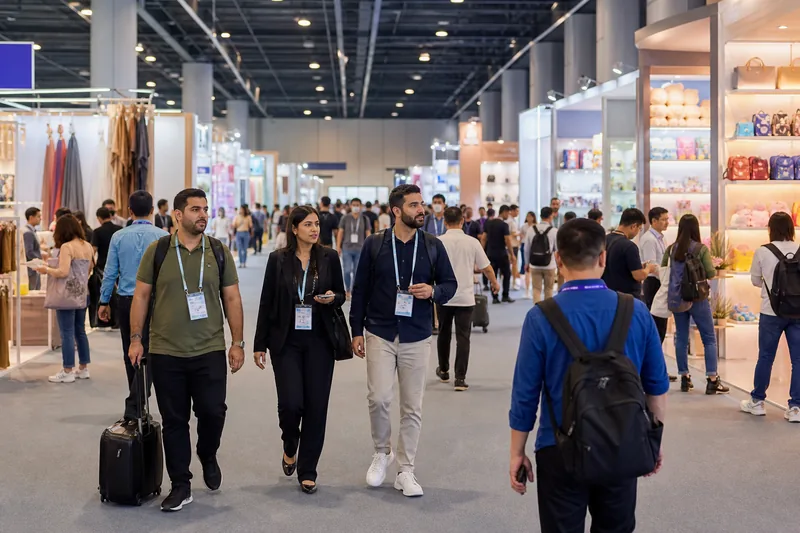
Canton Fair 2027 Phase 1 is expected to run April 15–19, 2027, but the organizer had not published the final 2027 calendar as of August 31, 2026. Use those dates only for flexible planning until the official 141st Canton Fair notice appears. Phase 1 is the technology and industrial sourcing session: electronics, appliances, manufacturing equipment, vehicles, new energy, lighting, electrical products, hardware and tools.
This guide concentrates on Phase 1 while explaining the provisional Phase 1–3 sequence, registration, the Pazhou complex, transport, accommodation and the questions technical buyers should resolve before placing an order.
Contents: 2027 dates · Phase 1 products · venue and areas · registration · arrival timing · transport · hotels · five-day plan · supplier checks · FAQ
Canton Fair 2027 Phase 1–3 dates: confirmed or expected?
The safe answer is that the 2027 dates are expected, not yet officially confirmed. The spring fair has followed the same three blocks for many sessions, including the official 2026 schedule. That pattern supports advance planning, but it does not bind the organizer.
| 141st Canton Fair, spring 2027 | Planning dates | Status on Aug. 31, 2026 | Typical focus |
|---|---|---|---|
| Phase 1 | April 15–19, 2027 | Expected; awaiting official confirmation | Technology, manufacturing, mobility, energy, hardware |
| Phase 2 | April 23–27, 2027 | Expected; awaiting official confirmation | Housewares, gifts, furniture, building materials |
| Phase 3 | May 1–5, 2027 | Expected; awaiting official confirmation | Fashion, textiles, toys, health, food and consumer goods |
The recent official opening schedule is 9:30 a.m.–6:00 p.m. The gaps—normally April 20–22 and April 28–30—are changeover days, not regular exhibition days. Buyers attending two phases can use them for factory visits or sample reviews. Confirm dates, hours, sections and the edition number on the official Canton Fair website before buying non-refundable travel.
What products are expected at Canton Fair 2027 Phase 1?

Phase 1 is designed for buyers who need technical specifications, production capability and compliance evidence—not merely a fashionable finished product. The final 2027 section list may change, but recent official categories provide a reliable working framework.
| Phase 1 group | Expected sections | Questions that change the buying decision |
|---|---|---|
| Electronics and appliances | Consumer electronics, information products, household appliances | Voltage/frequency, plug, radio modules, firmware, app support, energy label, repair parts |
| Manufacturing | Industrial automation, processing machinery, power equipment, general parts, agricultural and construction machinery, chemicals and new materials | Capacity tolerance, duty cycle, utilities, installation, commissioning, spare parts and remote service |
| Vehicles and two-wheelers | Vehicles, new-energy mobility, parts, motorcycles and bicycles | Homologation, battery transport, diagnostic tools, parts catalog and after-sales network |
| Light and electrical | Lighting, electrical products and new energy | Photometric/electrical reports, protection rating, cell/inverter origin, warranty exclusions |
| Hardware and tools | Hand tools, power tools, fasteners and hardware | Steel grade, hardness, torque, motor/battery platform, consumables and packaging tests |
Who should prioritize Phase 1?
It is most useful for industrial distributors, electrical wholesalers, appliance and tool brands, renewable-energy integrators, spare-parts importers, construction and agricultural equipment dealers, and businesses developing private-label technical goods. A general e-commerce seller without product knowledge can still attend, but should first narrow the category and hire independent technical support where safety or certification risk is material.
When Phase 1 is the wrong phase
Choose Phase 2 for home décor, furniture, gifts, ceramics and building finishes; choose Phase 3 for clothing, fabrics, shoes, bags, toys, food, health, personal care and pet categories. Do not assume an exporter will remain for all phases. Exhibitors and section layouts change during the three-day gaps.
Venue and hall distribution: how Areas A–D work
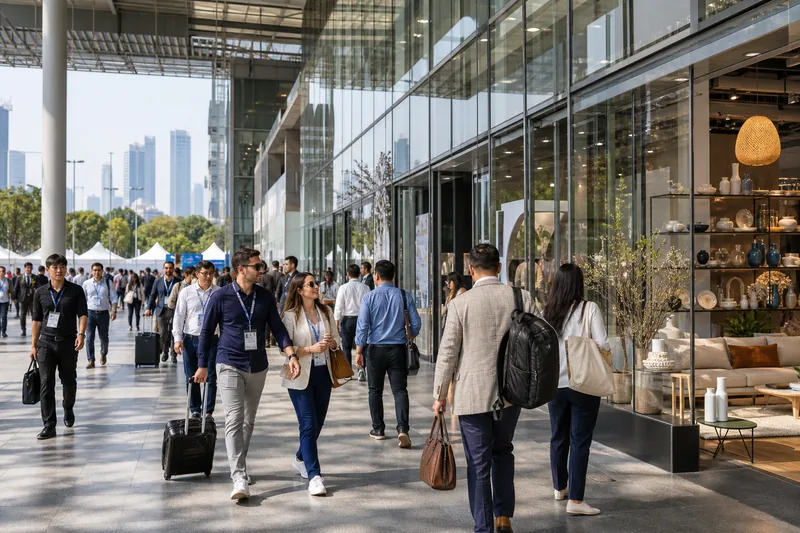
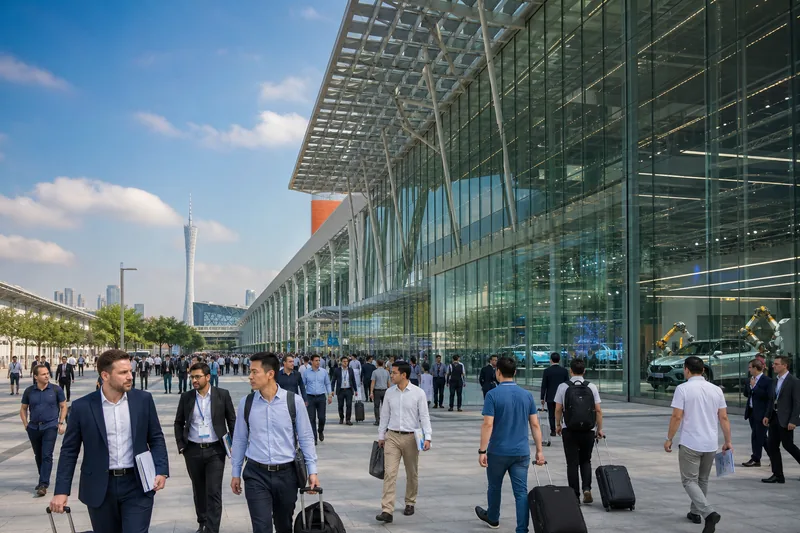
All three phases take place at the China Import and Export Fair Complex, 382 Yuejiang Zhong Road, Haizhu District, Guangzhou. The Pazhou campus contains Areas A, B, C and D, multiple floors, connectors and separate entrances. The final product-to-hall allocation for 2027 was not available when this guide was prepared.
Never publish or follow a guessed hall number. Once the 141st directory opens, search the exhibitor and save six fields: company, product section, area, hall, floor and stand. “Meet at Canton Fair” is not a usable appointment location. Group meetings within one area and allow 15–30 minutes between distant halls.
Recent access guidance associates Xingangdong Metro Exit A with Areas A and D; Pazhou Line 8 Exits A/B with Area B and Exit C with Area C; and Pazhou Line 11 Exits E/F with Area B. Use this only as a route framework and compare it with the final 2027 access notice.
How to register for Canton Fair 2027 Phase 1
Overseas trade visitors normally enter with a personal Overseas Buyer Badge, not a day ticket. The current system accepts year-round account creation, but 2027-specific options, documents, collection points and policies must be checked when released.
- Enter through the official site or Buyer Service System; verify that the domain ends in
cantonfair.org.cn. - Create an account or recover your previous profile. Returning buyers should avoid duplicate accounts.
- Select the overseas buyer badge workflow and complete personal and company details exactly as supported by your documents.
- Upload the requested portrait and ID information. Select onsite attendance and Phase 1 when the 141st session becomes available.
- Request an official invitation if needed for a visa application. The invitation is supporting evidence; it is not a visa or entry guarantee.
- Save the approval receipt offline and check the official list of badge collection offices.
- Collect or activate the physical badge with the original registered ID and all session-specific documents, commonly including a business card and receipt.
Recent editions offered badge services at the complex and selected airports, railway stations, ferry facilities and designated hotels. Those locations and hours change. Do not rely on a 2026 list for 2027. Never buy, borrow or modify a badge; it is linked to the registered participant.
How early should you arrive?
A first-time overseas visitor should reach Guangzhou one or two full days before Phase 1. If April 15 is confirmed, April 13 is conservative and April 14 is the minimum comfortable target. The buffer covers flight disruption, badge collection, mobile connectivity, payment setup, jet lag and a trial journey to Pazhou.
Start visa planning once passport and travel dates are clear; nationality and consular location determine the requirements. While dates remain provisional, book changeable fares and refundable rooms. Do not use an invitation letter as proof that a visa will be issued.
On opening day, reach the correct entrance 30–45 minutes before the published opening time. Schedule your highest-priority suppliers after you have cleared entry and oriented yourself—usually not in the first 15 minutes.
Transport to Pazhou
Metro
Line 8 serves Xingangdong and Pazhou; Line 11 also serves Pazhou. The metro is generally more predictable than road transport during fair opening and closing peaks. From Guangzhou South Railway Station, a common route is Line 2 to Changgang and then Line 8. From Baiyun International Airport, plan roughly 60–90 minutes door to door, including transfers, walking and queues, then verify the live route.
Guangzhou’s 2026 visitor information reported international bank-card acceptance on the metro and relevant support at selected Pazhou-area stations. This is useful context, not a promise for every card in 2027. Prepare mobile payment where eligible, a backup card and some RMB.
Taxi, ride-hailing and Hong Kong
Cars help teams carrying samples but can be delayed at 9:00 and 18:00. Pin the exact area or entrance in Chinese. Pazhou Ferry Terminal has supported selected Hong Kong connections; check the 2027 timetable, immigration conditions and baggage rules before using it for a flight connection.
Where to stay for Phase 1
| Location | Best for | Main trade-off |
|---|---|---|
| Pazhou / nearby Haizhu | First-time visitors, early meetings, sample handling | High fair-period demand and prices |
| Along Line 8 or Line 11 | Predictable commute and broader price choice | Check the real walk and transfers |
| Tianhe | Business dining and city meetings | Longer ride; exact station matters |
| Yuexiu | City atmosphere and varied hotels | Less efficient for five consecutive fair days |
As editorial planning advice, reserve a refundable room 8–12 weeks ahead; for a walkable hotel or group, three to five months is safer once dates are official. Compare door-to-hall time, breakfast hours, cancellation, deposit and late check-in. The official fair travel platform is a useful reference, but its listings do not remove the need to compare conditions.
A hotel that hosted a badge counter in an earlier session may not host one in 2027. Confirm against the organizer’s current list rather than a booking-platform description.
A five-day Phase 1 plan that avoids random browsing
| Day | Objective | Output |
|---|---|---|
| Day 1 | Map the section and meet top prequalified suppliers | Corrected shortlist and comparable baseline quotes |
| Day 2 | Technical deep dives and demonstrations | Specification gaps, certificates and sample list |
| Day 3 | Alternative suppliers and component options | Benchmark prices and supply-chain alternatives |
| Day 4 | Second meetings, customization and commercial terms | Revised quotation, MOQ, tooling and lead-time scenarios |
| Day 5 | Close evidence gaps and plan post-fair work | Sample orders, factory visits and verification tasks |
Four to eight weeks before travel, prepare an RFQ with the application, technical requirements, annual forecast, trial quantity, destination market, packaging and mandatory standards. Use the official app or directory to book 20–30 minute meetings. Maintain an A-list and B-list; exhibitors can cancel or change staff.
How to evaluate Phase 1 suppliers at the booth
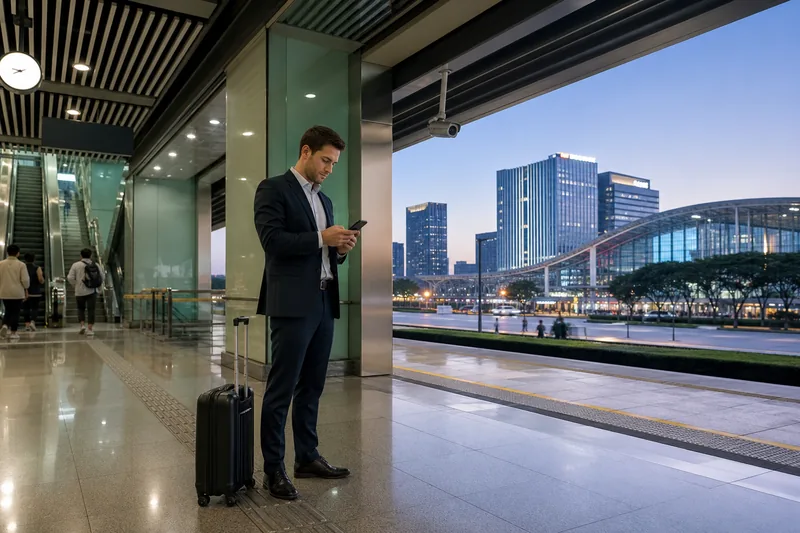
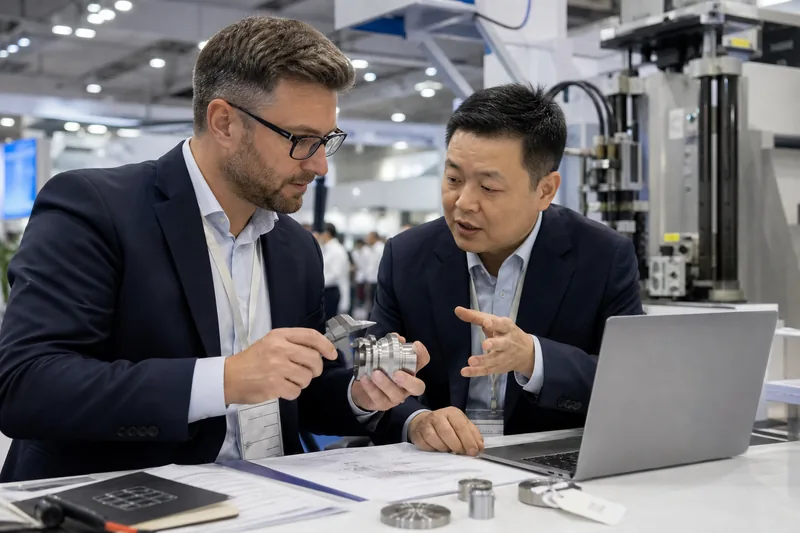
A polished stand proves exhibition participation, not production capability. For each candidate, record the exact legal company name, factory address, exporter name, booth number, model, quote version and salesperson. Then test claims with documents and samples.
- Factory status: Which processes are in-house? Which are subcontracted? Can the production site be audited?
- Specification: What tolerances, materials, components and test methods define acceptance?
- Compliance: Which standard and country does each report cover? Does the report name the same factory and exact model?
- MOQ and tooling: Separate stock MOQ, customized MOQ, tooling ownership, maintenance and refund conditions.
- Capacity and lead time: Ask for normal and peak-season output, component bottlenecks and the date production starts after approval.
- Quality control: Define incoming, in-process and final checks, AQL or technical acceptance limits, and treatment of nonconforming units.
- After-sales: Clarify spare parts, training, remote diagnostics, warranty exclusions, response route and who bears freight.
- Payment: Match the beneficiary to the contracting entity; verify any bank-account change through a previously known channel.
Do not approve mass production from a booth sample alone. Order and test a sample, confirm a signed specification or golden sample, verify the company, and inspect before shipment when risk warrants it. Our guide to checking whether a Chinese supplier is reliable expands this due-diligence stage.
Latin American buyers needing Chinese-language follow-up, multi-supplier consolidation or pre-shipment coordination can consider Chilatshop’s China sourcing workflow after the fair. Its role should be defined in writing; it does not replace the importer’s compliance or market analysis. Compare the fair with a permanent wholesale hub in our guide to the Canton Fair versus Yiwu Market.
Frequently asked questions about Canton Fair 2027 Phase 1
Are April 15–19, 2027 official dates?
No official 2027 announcement was visible as of August 31, 2026. They are planning dates derived from the long-running schedule. Confirm before purchasing non-refundable travel.
Will 2027 Phase 1 be the 141st Canton Fair?
Spring 2027 is expected to be the 141st session based on the twice-yearly numbering sequence, but the organizer’s announcement is the authoritative confirmation.
Do overseas buyers need a ticket?
They normally use a named Overseas Buyer Badge rather than a daily consumer ticket. Check the 141st rules, eligibility and fees in the official system.
Can the same badge be used for Phases 2 and 3?
Valid buyer badges have generally been reusable across phases and sessions. Verify badge status and the 2027 attendance rules in your account.
Can I place a small trial order?
Often, but not always. Ask separately about samples, stock MOQ and customized production MOQ. A low-quantity first order may have a higher unit price or limited customization.
Does exhibiting mean a supplier is a factory?
No. The exhibitor can be a manufacturer, trading company or integrated exporter. Verify registration, address, processes, equipment and sample-to-production consistency.
How many days should a Phase 1 buyer attend?
Two or three days may cover a narrow, prequalified category. Buyers comparing several technical systems should use four or five days and reserve factory visits after the phase.
What should I carry?
Original required ID, badge or receipt, business cards, bilingual specifications, supplier scorecard, power bank, comfortable shoes, backup payment and offline copies of critical addresses. Check current security and battery rules before travel.
Conclusion
Plan Canton Fair 2027 Phase 1 around April 15–19 only as a provisional window until the official schedule appears. The trip creates value when the product phase, technical specification, hall route and supplier verification process are prepared together. Register early, arrive one or two days ahead, use a metro-friendly hotel, and leave Guangzhou with comparable evidence—not just catalogs.
Sources consulted