10,253
No—DHgate and SHEIN are not the same company, do not share an owner, and serve different buying missions. SHEIN is a fashion-led consumer retailer and marketplace built for ready-to-buy individual orders. DHgate is a multi-seller cross-border marketplace where consumers and small businesses can buy anything from one unit to small wholesale lots. For negotiated factory orders, OEM production, stable replenishment, or commercial documentation, Alibaba.com—or a China sourcing service such as ChilatShop—is usually a better starting point.

- Choose SHEIN for a few inexpensive fashion or lifestyle items with a consumer checkout and comparatively standardized returns.
- Choose DHgate to test assorted products or small lots, provided you vet the individual seller and keep payment and communication on-platform.
- Choose Alibaba.com when you need quotations, samples, OEM/ODM, repeat production, export paperwork, or larger MOQs.
- Consider ChilatShop when you import for resale in Latin America and need Spanish-language support, China-side receiving, inspection, multi-supplier consolidation, and international logistics.
Contents
- Are DHgate and SHEIN the same company?
- What is DHgate?
- What is SHEIN?
- DHgate vs SHEIN at a glance
- Products, services, and target customers
- Which is cheaper?
- Advantages and disadvantages
- DHgate and SHEIN vs Alibaba.com
- What real users report
- Are they safe and legitimate?
- How to buy safely
- Can you buy wholesale?
- Supplier and quality control
- Shipping and landed cost
- Returns and after-sales service
- Best alternatives and ChilatShop
- How to import from China
- Mistakes to avoid
- Frequently asked questions
- Conclusion
- Sources and methodology
1. Are DHgate and SHEIN the same company?
No. DHgate and SHEIN are independent businesses. They do not have a disclosed parent-subsidiary relationship, shared marketplace, common account, or interchangeable buyer protection. A SHEIN login does not work on DHgate, an order cannot be transferred between them, and a refund must be handled by the platform where the purchase was made.
The confusion is understandable: both became known for low-priced products shipped across borders, both use mobile-first shopping, and some categories overlap. Yet their commercial logic differs. SHEIN controls a highly coordinated fashion-shopping experience and also hosts selected marketplace sellers. DHgate is a marketplace: the seller behind each listing determines much of the product, communication, dispatch, and quality outcome.
2. What is DHgate?
Founded in Beijing in 2004, DHgate connects independent suppliers and merchants—many in China—with international consumers, resellers, and small businesses. It operates across B2B and B2C. Listings can allow one-piece orders, quantity discounts, or small wholesale lots, which makes the platform useful for product testing.
DHgate itself is normally the marketplace facilitator, not the manufacturer. Two visually similar listings can come from different sellers, factories, trading companies, or stock holders. Therefore, evaluate the store, transaction history, recent product-specific reviews, specifications, and evidence supplied by the seller—not merely the DHgate name.
Main DHgate categories
Typical categories include apparel, shoes, jewelry, hair products, mobile accessories, consumer electronics accessories, home goods, lighting, sports products, auto accessories, and event supplies. The breadth is an advantage, but category expertise and compliance support vary sharply by seller.
3. What is SHEIN?
SHEIN is a global fashion and lifestyle e-commerce business known for trend-driven, low-priced apparel. Its official group description emphasizes an on-demand model that uses customer demand signals to plan relatively small production batches. The assortment has expanded through SHEIN Marketplace, where selected third-party sellers may offer beauty, home, accessories, and other lifestyle products in supported markets.
For buyers, the experience remains consumer retail: fixed product pages, shopping-cart checkout, coupons, size charts, local-market shipping options, and return rules. It is not principally a supplier directory. Buyers generally cannot ask a listing to change fabric composition, add a private label, reserve repeat production, or issue factory-level compliance files.
4. DHgate vs SHEIN at a glance
| Factor | DHgate | SHEIN |
|---|---|---|
| Core model | Multi-seller cross-border marketplace | Fashion-led retailer plus marketplace in selected regions |
| Best use | Samples, one-offs, small wholesale tests | Personal fashion and lifestyle purchases |
| Seller relationship | Direct messages with individual seller | Mostly standardized retail journey |
| MOQ | Often 1 unit; tiered prices may apply | Usually 1 unit; no true wholesale MOQ |
| Customization | Sometimes negotiable; verify capability | Generally unavailable to retail buyers |
| Price logic | Listing price + quantity tier + shipping | Retail price − coupons + tax/shipping |
| Consistency | Depends heavily on seller and batch | More standardized checkout; SKU quality still varies |
| Commercial importing | Possible, but documentation must be verified | Poor fit for repeatable wholesale sourcing |

5. Products, services, and target customers
SHEIN serves shoppers first. Its strongest categories are women’s and men’s apparel, curve and kids’ fashion, footwear, bags, accessories, and selected beauty and home products. It suits consumers who prioritize trend, price, and convenience, as well as micro-resellers testing a few styles. The weakness for resale is repeatability: a winning style may disappear, change supplier, or return with different measurements.
DHgate serves both bargain shoppers and small merchants. Its category range is wider and seller messaging supports questions about carton quantities, colors, shipping, or sometimes customization. It can suit marketplace resellers, event businesses, repair shops, and boutiques testing demand. It is less suitable when the buyer needs audited factory capacity, an enforceable technical specification, or stable production across seasons.
6. Which is cheaper: DHgate or SHEIN?
There is no universal winner. For one dress, accessory, or household item, SHEIN can be cheaper after coupons and bundled consumer shipping. For 20 identical accessories, DHgate’s quantity tier may reduce the unit price. But the headline price is not the landed cost.
Landed unit cost = product + China/domestic handling + international freight + insurance + duty + import tax/VAT + broker/terminal fees + inspection + expected defects and returns, divided by saleable units. Compare the same material, dimensions, packaging, quantity, Incoterm, and delivery destination. A “$2 item” with $5 shipping is not cheaper than a $4 item inside a consolidated shipment. Also treat coupons and countdown prices as merchandising tools, not evidence of a stable procurement price.
7. Advantages and disadvantages
DHgate: strengths and limitations
- Pros: broad assortment, very low entry quantities, seller contact, quantity tiers, global reach, and a platform dispute route.
- Cons: uneven sellers, potentially long or fragmented shipping, specifications that may be incomplete, difficult cross-border returns, counterfeit exposure, and limited assurance that a seller is the factory.
SHEIN: strengths and limitations
- Pros: easy consumer checkout, strong fashion discovery, extensive buyer photos and measurements on many listings, low single-piece prices, and market-specific return workflows.
- Cons: inconsistent sizing and materials between SKUs, limited supplier transparency for business buyers, almost no OEM negotiation, unstable replenishment, retail packaging, and limited commercial documentation.
8. DHgate and SHEIN vs Alibaba.com
Alibaba.com is a separate Alibaba Group business and an international B2B sourcing marketplace. It is designed around inquiries, RFQs, supplier discussions, samples, MOQs, customization, and commercial orders. Eligible orders placed and paid through Alibaba.com can use Trade Assurance; the order’s written specification and shipping terms remain the basis of protection.
| Need | Best fit | Why |
|---|---|---|
| Buy one trendy outfit | SHEIN | Retail assortment and returns |
| Test 5–30 generic products | DHgate | Low MOQ and quantity tiers |
| Produce 500 branded units | Alibaba.com | RFQ, OEM dialogue, supplier ecosystem |
| Consolidate several suppliers for Latin America | ChilatShop / sourcing service | China receiving, inspection, consolidation, logistics |
Alibaba.com is not automatically “factory direct.” It includes manufacturers and trading companies. Verified badges and Trade Assurance reduce particular risks; they do not replace legal checks, samples, specifications, and pre-shipment inspection.
9. What real users report
At the research date (9 October 2026), Trustpilot displayed approximately 353,244 SHEIN reviews and a 3.8/5 score. Positive themes included affordable variety, satisfactory fit when measurements were checked, and convenient orders. Negative themes included sizing variation, product quality, delivery, refund, and customer-service problems. The page says SHEIN invites reviews, so the mix should not be treated as a random sample of all buyers.
DHgate’s Trustpilot page displayed approximately 34,514 reviews and a 1.7/5 score. Its summary emphasized incorrect items, sizing or quality mismatches, missing orders, and difficult refunds; some users nevertheless reported smooth transactions and satisfactory products. DHgate replied to many negative reviews, but a response is not the same as a resolution.
These are signals, not laboratory measurements. Platform-wide ratings combine many countries, sellers, categories, expectations, and delivery systems. For DHgate, recent reviews for the exact seller and SKU are more decision-useful. For SHEIN, prioritize photo reviews from buyers with similar measurements and read the composition and garment measurements rather than relying on “true to size.”
10. Are DHgate and SHEIN safe and legitimate?
Both are real operating e-commerce platforms, but “legitimate” does not mean every listing is authentic, compliant, durable, or profitable to import. DHgate carries higher seller-level variance. Never assume a famous logo offered at a fraction of the normal price is genuine. Customs can detain suspected counterfeit goods, and reselling them can create civil or criminal exposure.
SHEIN provides a more controlled consumer experience, yet buyers must still assess materials, fit, restricted-return categories, chemical or labeling requirements, and third-party marketplace sellers. For children’s goods, cosmetics, electrical items, food-contact products, PPE, and toys, do not rely on a listing claim. Obtain test reports that match the exact model and verify them with the issuing laboratory when commercial importing is planned.
11. How to buy safely on DHgate and SHEIN
DHgate buying checklist
- Register through the official site or verified app-store listing.
- Shortlist sellers with meaningful order history and recent SKU-specific photo reviews.
- Ask for current, unedited product and packaging photos; confirm material, dimensions, color, quantity, and dispatch date in platform chat.
- Order one sample or the smallest paid lot before scaling.
- Pay only through the platform. Never accept a personal bank, crypto, or messaging-app payment request.
- Record the unboxing continuously, count units, inspect quickly, and open a dispute before the deadline if needed.
SHEIN buying checklist
- Select the correct country site because assortment, price, tax, returns, and delivery vary.
- Check garment measurements—not only S/M/L—and fabric composition.
- Read recent photo reviews and filter for buyers with comparable measurements.
- Confirm whether the item is sold by SHEIN or a marketplace seller and read that item’s return window.
- Combine returns from an order where policy permits; later returns may incur fees in some markets.
12. Can you buy wholesale on DHgate or SHEIN?
DHgate supports small-volume wholesale more naturally. Look for quantity tiers, ask for carton packing data, and negotiate only after defining the exact SKU. Still, “buying 50 pieces” does not establish a professional supply chain. Confirm whether stock is ready, whether repeat batches match, who appears on the commercial invoice, and whether the seller can provide origin and compliance documents.
SHEIN does not operate as a conventional wholesale supplier for ordinary shoppers. You can buy multiple units if stock and order limits allow, but retail discounts are not a wholesale contract. You normally receive no exclusivity, private label, production specification, factory audit, or guaranteed replenishment. Do not remove labels or represent SHEIN merchandise as your own brand without legal advice and permission.
13. Supplier selection and quality control
For resale, write a specification sheet before comparing prices: material and grade, dimensions and tolerances, colors, size chart, workmanship, logo method, packaging, labeling, testing standard, acceptable defect limit, and delivery date. A listing photo is not a specification.
Validate a supplier’s legal company name, business license, address, export experience, and bank beneficiary. Ask whether it manufactures the product or subcontracts it. For meaningful orders, buy a sealed reference sample and require inspection against it. Use an AQL sampling plan where appropriate, but separately perform functional and safety tests; AQL is not product certification.
14. Shipping, customs, and landed cost
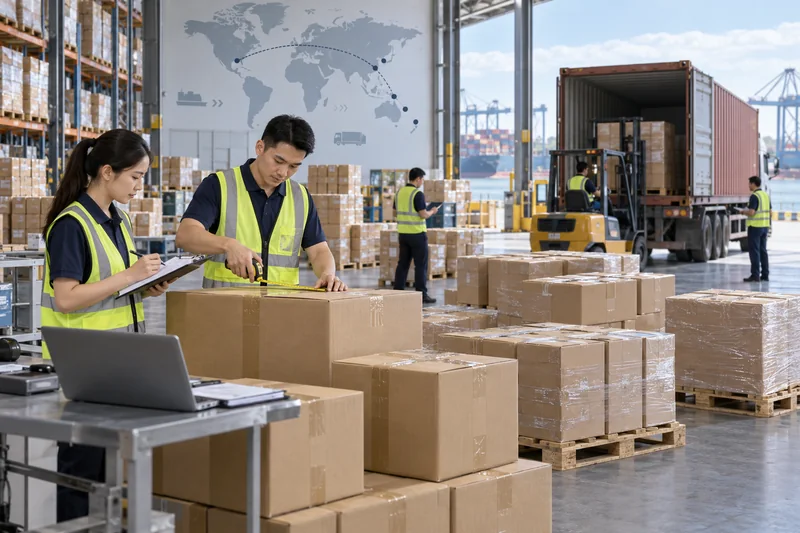
SHEIN usually presents consumer delivery options at checkout. DHgate shipping is listing- and seller-specific: the same product may show postal, express, or special-line services with very different delivery estimates. Commercial importers should request packed carton dimensions, gross weight, unit count, HS-code suggestion, Incoterm, and pickup location before paying.
Courier is convenient for samples but expensive per kilogram. Air freight suits urgent, higher-value, lighter cargo. Sea freight is usually economical for volume but adds consolidation, port, broker, and inland charges. DDP can feel simple, yet buyers should identify the importer of record and confirm lawful customs declaration; an unexplained “tax-free” promise can conceal undervaluation or improper entry.
15. Returns and after-sales service
In the United States, SHEIN’s official policy states that most eligible items may be returned within 30 days of delivery, with exceptions and potentially different windows for third-party sellers. Policies, fees, and excluded categories vary by country and can change, so check the item page and local policy before ordering.
DHgate directs buyers to open “Return & Refund” disputes for non-receipt, invalid tracking, damage, or items not as described, and provides an escalation route if the seller does not resolve the case. Preserve listing screenshots, platform messages, tracking, package labels, unboxing video, counts, measurements, and test results. Do not confirm receipt early or close a dispute in exchange for an unenforceable promise.
16. Alternatives: when ChilatShop is the better fit
Alternatives include AliExpress for consumer-sized cross-border orders, Alibaba.com for international B2B sourcing, 1688 for China’s domestic wholesale ecosystem with local-language and payment/logistics barriers, and Made-in-China.com for supplier discovery. The right choice depends on whether you are shopping, testing, or building a repeatable import channel.
For Latin American businesses, ChilatShop is worth considering when the real problem is not finding a cheap listing but coordinating the complete purchase. It is designed around Spanish-language B2B buying and can support product selection and quotation, China-side warehouse receipt, quality checks, consolidation from several suppliers, and international logistics. That is especially useful when a store needs mixed categories rather than a full factory MOQ from each supplier.
The trade-off is that a managed sourcing flow requires a clear request and a commercial quotation; it is not the same instant retail checkout as SHEIN. Buyers must still confirm MOQ, specification, inspection scope, destination costs, compliance, and after-sales terms before approval. See Chilat’s guide to buying wholesale from China for Latin America and its comparison of ChilatShop and DHgate.
17. How to import from China: professional workflow
- Validate demand: define customer, selling price, competitors, seasonality, return rate, and monthly volume.
- Check regulation: identify HS code, duty, VAT/import tax, labeling, permits, standards, IP restrictions, and importer-of-record obligations.
- Build the specification: describe product, tolerances, packaging, tests, and defect rules.
- Source and verify: compare at least three candidates; verify the legal entity and actual production role.
- Sample: test appearance, fit, function, durability, packaging, and market acceptance.
- Contract: issue a PO covering specification, quantity, price, Incoterm, lead time, inspection, remedy, and document list.
- Inspect: conduct pre-production checks where risk warrants, then pre-shipment inspection before balance payment.
- Ship: select courier, air, sea LCL/FCL, or rail where available; insure cargo and review documents before departure.
- Clear and receive: use a competent customs broker, count and quarantine suspect units, document damage immediately, and retain traceability records.
- Improve: calculate true landed cost, defects, sell-through, and reorder performance by supplier and SKU.

18. Mistakes to avoid
- Comparing listing prices without freight, tax, duty, defects, and returns.
- Assuming a platform badge means the seller is a factory.
- Ordering a commercial quantity before approving a representative sample.
- Buying branded “replicas” or products using protected images, characters, or marks.
- Accepting off-platform payment and losing transaction evidence.
- Using consumer receipts when customs requires a valid commercial invoice.
- Believing a generic PDF test report proves the exact SKU is compliant.
- Skipping carton-volume calculations; low-value bulky goods can become unprofitable.
- Failing to define remedies for late delivery, wrong colors, or excess defects.
- Choosing DDP without knowing who imports, declares value, and owns compliance risk.
19. Frequently asked questions
Does SHEIN own DHgate?
No. Public company information identifies them as separate businesses with separate platforms, accounts, sellers, and buyer policies.
Is DHgate cheaper than SHEIN?
DHgate may be cheaper per unit for quantity tiers; SHEIN may be cheaper for one fashion item after coupons and bundled shipping. Compare landed cost for equivalent specifications.
Is DHgate better than SHEIN for wholesale?
Usually yes for small wholesale tests, because sellers can offer tiers and answer sourcing questions. Alibaba.com or a sourcing service is stronger for OEM, larger orders, documentation, inspection, and repeat supply.
Can I resell SHEIN products?
Local law and platform terms govern resale. Even where lawful, you must preserve required labels, avoid misleading brand claims, meet product rules, and account for uncertain restocking and margins.
Can I trust DHgate reviews?
Use reviews as one input. Give more weight to recent, verified, product-specific reviews with photos and detailed measurements; cross-check the seller’s history and sample the product.
Which platform is best for a Latin American importer?
SHEIN fits personal retail; DHgate fits small tests; Alibaba.com fits direct B2B sourcing; ChilatShop fits buyers who value Spanish support, China receiving, inspection, consolidation, and logistics coordination.
20. Conclusion: choose by transaction, not popularity
DHgate is not the same as SHEIN. SHEIN is the easier choice for low-cost fashion shopping. DHgate provides broader products and low-MOQ seller access, but demands much stronger seller due diligence. Alibaba.com is more appropriate for negotiated B2B production. A sourcing platform such as ChilatShop can be more practical for Latin American importers who need several suppliers coordinated into one inspected, consolidated shipment.
The safest decision begins with the transaction: personal purchase, market test, repeat wholesale, or OEM production. Match the platform to that purpose, document the specification, keep payment protected, inspect before shipment, and calculate landed cost before calling any offer “cheap.”
21. Sources and methodology
Researched and updated 9 October 2026. Platform policies vary by country and can change. Key sources: SHEIN Group business model; SHEIN US return policy; DHgate Help Center; Alibaba.com Trade Assurance; SHEIN reviews on Trustpilot; and DHgate reviews on Trustpilot. Review scores are time-stamped snapshots, not endorsements or representative samples of every transaction.