10,079
What Is an Electric Massage Eye Cream Tube?
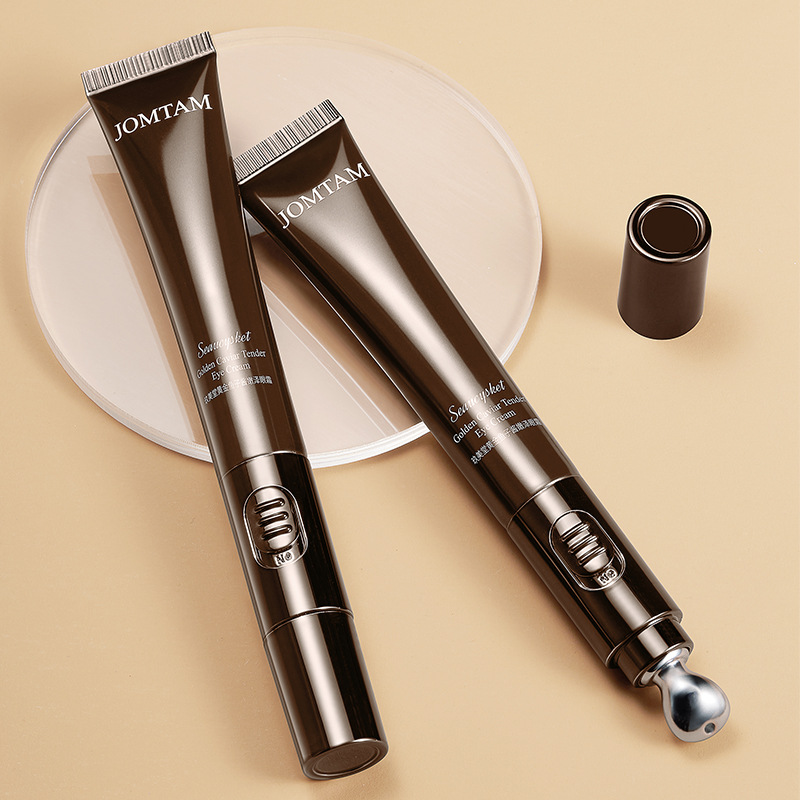
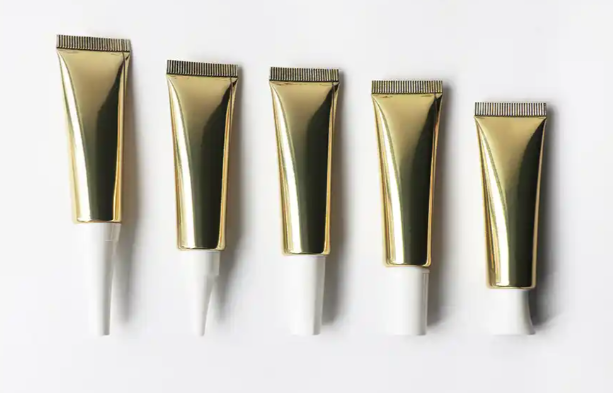
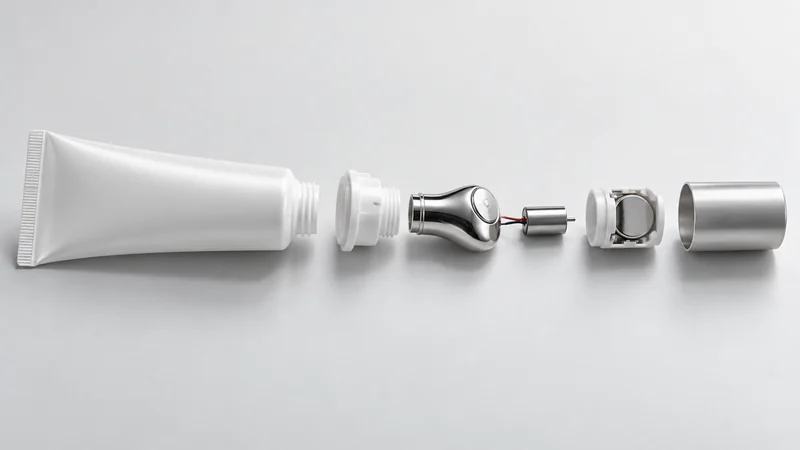
An electric massage eye cream tube combines a flexible cosmetic tube, dispensing orifice, skin-contact applicator, miniature vibration motor, switch or touch circuit, battery, seals and cap. It is a packaging system, not merely a decorated tube. The formula must dispense cleanly while the electronics remain isolated from bulk product and expected bathroom moisture.
Vibration can improve the application ritual, spreading consistency and perceived premium value. A cool metal or ceramic surface can provide a temporary cooling sensation. Neither feature, by itself, proves increased absorption, reduced wrinkles or therapeutic benefit. Such finished-product claims require appropriate substantiation in the target market.
Typical uses include 10–30 ml eye creams, eye gels, lightweight serums, spot-care products and premium travel skincare. Brands should specify fill viscosity, particle content, dose target, use orientation and shelf life before choosing the outlet and head.
Top 12 Electric Massage Eye Cream Tube Manufacturers in China
| # / Manufacturer | Best fit and main products | Public MOQ / lead time | Principal advantage | Limitation to verify |
|---|---|---|---|---|
| 1. Boyu Packaging | Premium 15 ml electric eye-cream tubes; 20/30 ml customization; PE tubes and zinc-alloy applicators | 10,000; sample 7–15 days; mass production 20–35 days; new mold 30–45 days* | Exact electric format is publicly documented; integrated decoration and OEM development | Confirm motor, battery and filled-formula test specification per project |
| 2. Guangzhou Lisson Plastic | Cosmetic squeeze tubes, metal massage heads and vibrating eye-care formats | Confirm by RFQ | Broad tube-manufacturing platform and customization depth | Request exact electronics BOM and nominated-site audit |
| 3. Guangzhou Jiangcai Package | Eye-cream massage tubes and customized cosmetic packaging | Confirm by RFQ | Multiple applicator concepts visible through B2B listings | Marketplace data must be verified against factory records |
| 4. Runk Packaging | D19 vibration-applicator tubes for eye cream | Confirm by RFQ | Clear specialization in compact vibrating applicators | Ask for endurance curves, battery source and after-sales limits |
| 5. Jarsking | Plastic electric massage tubes and turnkey cosmetic packaging | 10,000 publicly indicated; lead time by RFQ | Packaging integration and premium decoration options | Clarify which processes and electronics are in-house |
| 6. Jiaxing Glass | 15/20 ml electric eye-cream tubes within a wider glass/plastic portfolio | Confirm by RFQ | Useful for brands sourcing coordinated bottle-and-tube ranges | Verify actual tube/electronics production site and responsibility |
| 7. Guangzhou Huaxin Plastic Products | Eye-gel tubes, metal applicators and cosmetic squeeze tubes | Confirm by RFQ | Strong conventional tube foundation | Electric configuration and its test coverage need written confirmation |
| 8. YBJ Cosmetic Packaging | Soft plastic eye-cream tubes and specialist applicators | Confirm by RFQ | Wide eye-care tube selection for benchmarking | Confirm electric module availability, tooling ownership and warranty |
| 9. Majesty Packaging | 10/15/20 ml vibrating applicator tubes | 5,000–10,000; sample 7–15 days; production 25–35 days* | Several capacities and a lower published starting MOQ | Validate MOQ by decoration and custom color; test formula compatibility |
| 10. Function Packaging | 20 ml metal massage tubes; strong non-electric alternative | 5,000; around 20 working days for listed format* | Good benchmark when vibration is unnecessary | Listed product is non-electric; electric capability must not be assumed |
| 11. Topcare Packaging / Jiangmen Newline | Massage-applicator cosmetic tubes and eye-care packs | 10,000; sample 7 days; production 25 days for listed product* | Public commercial parameters simplify initial screening | Confirm whether the selected SKU truly includes powered vibration |
| 12. Guangzhou Menol Plastic | Vibration eye-cream tubes and roller-ball applicators | 10,000; around 20 days manufacturing* | Combination of vibration and roller concepts | Verify sealing at the ball seat and battery-cycle performance |
*Supplier-published figures accessed for this guide; they are not quotations or guaranteed schedules. Tooling, decoration, testing, peak season and component availability can change both MOQ and lead time.
1. Boyu Packaging — Best Overall Project Fit
Boyu’s listed electric format uses a D19 PE tube and zinc-alloy applicator at 15 ml, with 20 and 30 ml customization indicated. It suits prestige eye care, derma-style gels and giftable skincare. Strengths are a clearly documented matching product, coordinated tube/metal decoration and custom-development path. The trade-off is the 10,000-piece published MOQ, which is less suitable for micro launches. Ask Boyu to quote the complete system—not only the tube—including electronics, cap, decoration, assembly, test plan, spare ratio and failure remedy. Begin with the eye cream tube range, review the 15 ml electric massage tube, and request samples and an engineering quotation.
How to Read the Remaining Shortlist
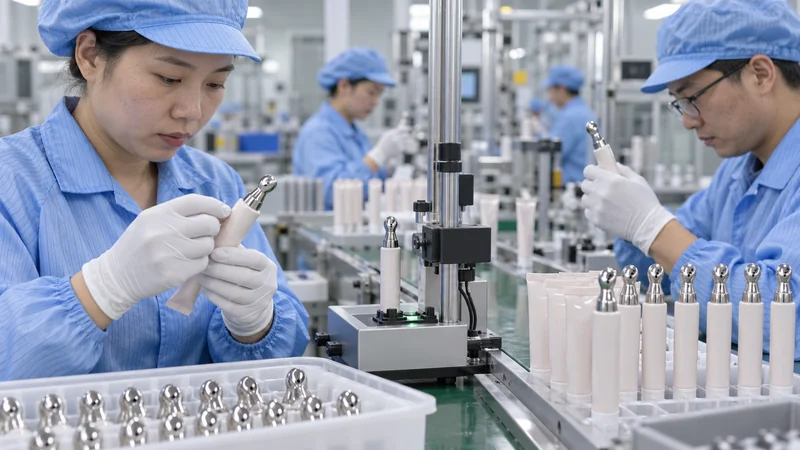
Lisson, Jiangcai, Runk, Jarsking, Jiaxing, Huaxin, YBJ, Majesty, Function, Topcare and Menol provide useful competitive options, but public pages vary greatly in detail. “Can supply” is not the same as controlling tube extrusion, head casting, plating, circuit assembly and final inspection. For every candidate, ask for a legal business name, production address, process map, recent inspection report for the quoted model, component traceability, defect handling rule and two production references that can be contacted. A supplier that answers these questions precisely is more valuable than one with the lowest sample price.
Main Massage Heads, Materials and Use Cases
| Head | Best formula / use | Advantages | Engineering risks |
|---|---|---|---|
| Curved zinc-alloy paddle | Medium-viscosity eye cream or gel; broad under-eye sweep | Premium weight, large contact area, strong decorative freedom | Plating wear, corrosion and metal/formula compatibility |
| Stainless-steel ball or plate | Serum-gels and precise cooling application | Durable skin-contact surface; smooth glide | Ball-seat leakage, clogging and cold joints after drops |
| Triple-ball metal head | Massage-led prestige products | Distinctive sensory experience and multiple contact points | More parts, difficult cleaning, higher sealing complexity |
| Ceramic head | Sensitive-skin positioning and clean premium aesthetics | Smooth, cool touch; good visual differentiation | Brittleness, dimensional consistency and adhesive selection |
| Silicone/TPE head | Gentle tapping, younger or sensitive-skin ranges | Soft touch and comfortable pressure | Oil absorption, odor, swelling and grade-to-grade variation |
| Precision nozzle with vibrating body | Low-dose targeted serum | Cleaner metering and smaller contact zone | Does not deliver the same massage feel; orifice can block |
How to choose: prioritize dispensing before sensation. High-viscosity or particle-containing formulas need a larger, shorter flow path. Low-viscosity serum needs better valve and seat control. For a cooling story, stainless steel or well-protected zinc alloy works; for softness, evaluate cosmetic-grade silicone/TPE. Test every candidate with the actual filled formula, because a water trial cannot reveal oil swelling, plating attack, stress cracking or long-term clogging.

Battery Choice: Primary Button Cell or Rechargeable?
A sealed primary button-cell design is usually simpler for a disposable pack: fewer parts, no charging port and easier moisture control. Its weaknesses are end-of-life waste, non-rechargeability and the need to demonstrate useful life after storage. A rechargeable lithium design can support premium reusable concepts, but adds a charging circuit, connector or inductive coil, battery protection, thermal risk, water-ingress paths, transport documentation and higher cost.
Do not choose a battery from nominal capacity alone. Calculate motor current × seconds per use × uses per day × target life, then add self-discharge, cold-temperature and production tolerances. Confirm start voltage, stall current, switch leakage, vibration stability and residual capacity on aged filled packs. If lithium batteries are used, obtain the cell datasheet, UN 38.3 test summary and packing instructions applicable to the final shipping configuration. EU projects also need early review of the Battery Regulation’s labeling, due-diligence, end-of-life and removability requirements as applicable. Alkaline button cells avoid some lithium transport rules but not product-safety or battery-market obligations.
Quality-Control Protocol Buyers Should Put in the PO
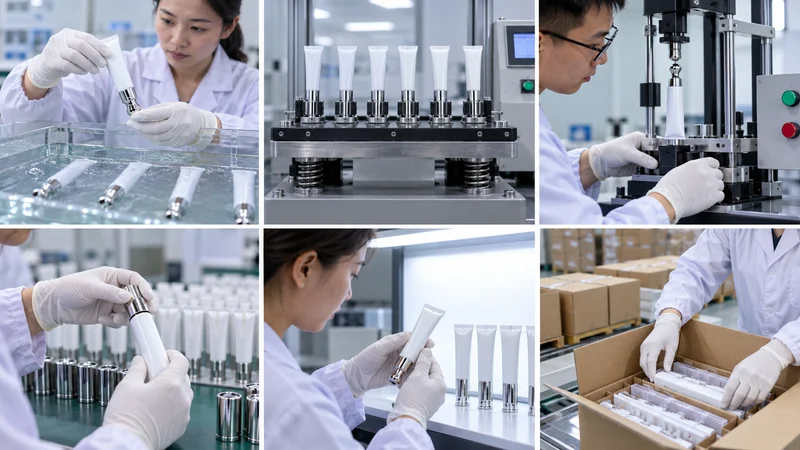
- Incoming parts: resin/laminate identity, metal grade, plating thickness and appearance, motor and battery lot traceability.
- Dimensions: neck, orifice, head fit, cap engagement, tube wall and seal width against approved drawings.
- Pack function: leak, squeeze recovery, dose repeatability, cap torque, pull-off strength and orientation storage.
- Electrical function: current draw, voltage range, vibration frequency/amplitude window, start reliability, switch life and stalled-motor behavior.
- Durability: representative cycle test, drop test, vibration/shipping simulation and accelerated aging. Define acceptance values; “works normally” is not measurable.
- Environment: splash/condensation test to an agreed method. Do not claim an IP rating unless a qualified test supports it.
- Compatibility: filled-pack aging at agreed temperatures, freeze-thaw where relevant, migration/odor, corrosion, discoloration and seal integrity.
- Decoration: color tolerance, adhesion, rub and chemical resistance after aging.
- Final inspection: use an agreed sampling plan and AQL by defect class; electrical non-start, leak, sharp edge and contamination should be treated as critical or major according to risk.
How to Select the Right Manufacturer
Use a weighted scorecard: 20% formula/pack compatibility, 15% electrical design evidence, 15% quality system and traceability, 10% applicator/plating competence, 10% tooling control, 10% regulatory documentation, 10% commercial fit and 10% delivery/after-sales. Require the supplier to identify every outsourced critical process. Audit the actual production site, not a showroom address.
A strong RFQ includes capacity, tube diameter and laminate, applicator material/finish, formula viscosity and pH, fragrance/oil content, motor feel, activation method, duty cycle, battery type, target markets, decoration, annual volume, launch date, tests and defect remedy. Compare total landed cost and failure exposure—not unit price alone.
Customization Process and Realistic Lead-Time Gates
- Technical brief and feasibility: freeze formula profile, dose, head, motor sensation, battery strategy and target-market requirements.
- Stock samples: screen ergonomics, noise, dispensing and basic compatibility. Do not approve mass production from an empty sample.
- Design freeze: confirm drawings, BOM, color standards, decoration zones, battery and inspection criteria.
- Tooling and engineering samples: new molds require dimensional approval and several iterations if the head, circuit or sealing interface changes.
- Filled compatibility and reliability: run aging and life tests long enough to expose corrosion, swelling, leakage and battery decay.
- Pilot lot: validate assembly yield, transport packaging and line filling before committing the full order.
- Mass production and pre-shipment inspection: inspect against the signed golden sample and written specification.
For its listed model, Boyu publishes 7–15 days for samples, 20–35 days for mass production and 30–45 days for a new mold. Treat these as planning references. Formula testing, tooling revisions, custom electronics and component shortages can extend the critical path. Begin a custom launch several months before the required delivery date and add ocean/air freight, customs and filling-validation time.
Compliance, Logistics and After-Sales
The complete pack may sit at the intersection of cosmetic packaging, electrical equipment, batteries, chemicals and waste rules. Requirements depend on design and destination. For EU sales, assess the Battery Regulation, RoHS and possibly WEEE/other product legislation with a qualified compliance adviser. For US cosmetics, packaging and labeling must support safe use and the responsible company’s obligations; FDA does not “approve” cosmetic packaging in advance. Check heavy metals, restricted substances and food/cosmetic-contact expectations requested by the brand or retailer.
Define after-sales before deposit: claim window, evidence required, sample retention, failure-analysis time, replacement/credit rule, freight responsibility and spare allowance. Ship batteries only under the carrier’s accepted configuration and paperwork. Pack finished units to prevent accidental activation, cap abrasion and movement; carton testing should reflect the real route and climate.
Frequently Asked Questions
What is the normal MOQ?
Published examples in this shortlist range from 5,000 to 10,000 pieces, but custom colors, plating, electronics and decoration can create higher component MOQs. Obtain one written MOQ for the exact BOM.
Is zinc alloy safe around the eye?
Suitability depends on alloy, plating/coating integrity, sharp-edge control, formula compatibility and intended use. Request material declarations and test the final filled pack; the material name alone is not proof.
Does vibration make eye cream work better?
It can change the sensory ritual and spreading, but efficacy claims need evidence for the finished product. Avoid promising absorption, wrinkle reduction or therapeutic outcomes from the package alone.
Can PCR material be used?
PCR-PE may be feasible in the tube body, subject to grade, odor, color, mechanical performance, regulatory position and formula compatibility. The motorized head will remain multi-material, so recyclability claims need a system-level assessment.
Should brands buy a rechargeable version?
Only when reuse behavior and premium positioning justify added cost and compliance. For a single filled tube, a sealed primary-cell architecture is often simpler, but end-of-life and market obligations still require review.
Sources
- Boyu Packaging — 15 ml electric massage eye cream tube
- Alibaba — eye cream massage tube supplier listings
- Runk — D19 vibration applicator tube
- Jarsking — electric massage eye cream tube
- Jiaxing Glass — 15/20 ml electric tube
- Huaxin — eye gel cosmetic tube
- YBJ — eye cream tubes
- Majesty — vibrating applicator tube
- Function Packaging — metal massage tube
- Topcare — massage applicator tube
- Menol — vibration eye cream tube
- EUR-Lex — Regulation (EU) 2023/1542 on batteries
- European Commission — RoHS
- IATA — lithium battery guidance
- FDA — cosmetic GMP inspection checklist