10,121
Last verified: October 15, 2026. If you searched for Chinabrands.com clothing hoping to open an account and place an order, the practical answer is simple: Chinabrands is no longer an active purchasing platform. Its website is unavailable, new registrations and orders are not functioning, and its former catalog, stock, prices, shipping promises and return rules should not be treated as current. This guide explains what the platform was, what users reported, and how to source clothing from China safely today.

Decision summary
- Can you buy there now? No reliable live ordering route exists.
- Was it always fake? No. It operated as a B2B wholesale and dropshipping platform, then deteriorated and went offline.
- Are old prices and reviews still useful? Only as historical context, not as a present quotation or service guarantee.
- What should buyers do? Select an active sourcing channel, verify the legal supplier, approve samples, calculate landed cost and inspect before shipment.
1. Is Chinabrands.com clothing still operating?
No. Checks performed for this guide found the domain unavailable, while several independent industry pages now describe Chinabrands as closed or offline since approximately 2024. A status monitor also reports prolonged downtime. There is no dependable route to create a new account, confirm live inventory, pay for merchandise, obtain customer support or enforce a return through the former site.
This distinction matters: an old product page, screenshot, social profile or review can remain indexed after a business stops trading. Search visibility is not proof that a supplier is operational. Before sending money to any platform, buyers should confirm a functioning domain, current legal company identity, reachable support, recent transaction evidence and a payment method with dispute protection.
2. What Chinabrands clothing was and how it worked
Historically, Chinabrands was a China-based B2B catalog used for wholesale and dropshipping. It connected online sellers with a broad selection of Chinese goods and offered fulfillment: a merchant selected products, listed them in an online store or marketplace, collected an end-customer order, paid Chinabrands, and the platform arranged dispatch. It was associated with SEAYAN HONGKONG LIMITED and was commonly described as having started around 2011.
For clothing sellers, its role was less like a specialist fashion factory and more like a multi-category distributor. The attraction was operational convenience: many SKUs, relatively low entry quantities, export shipping and integrations for ecommerce sellers. That model could help test demand, but it also placed catalog accuracy, stock synchronization, picking, packaging and delivery performance outside the retailer's direct control.
3. Historical products, prices and target users
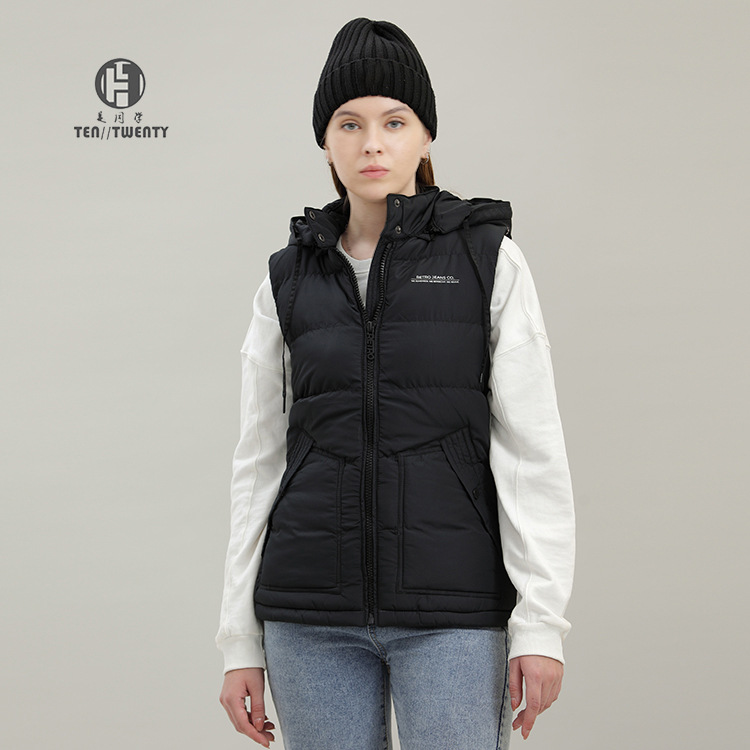
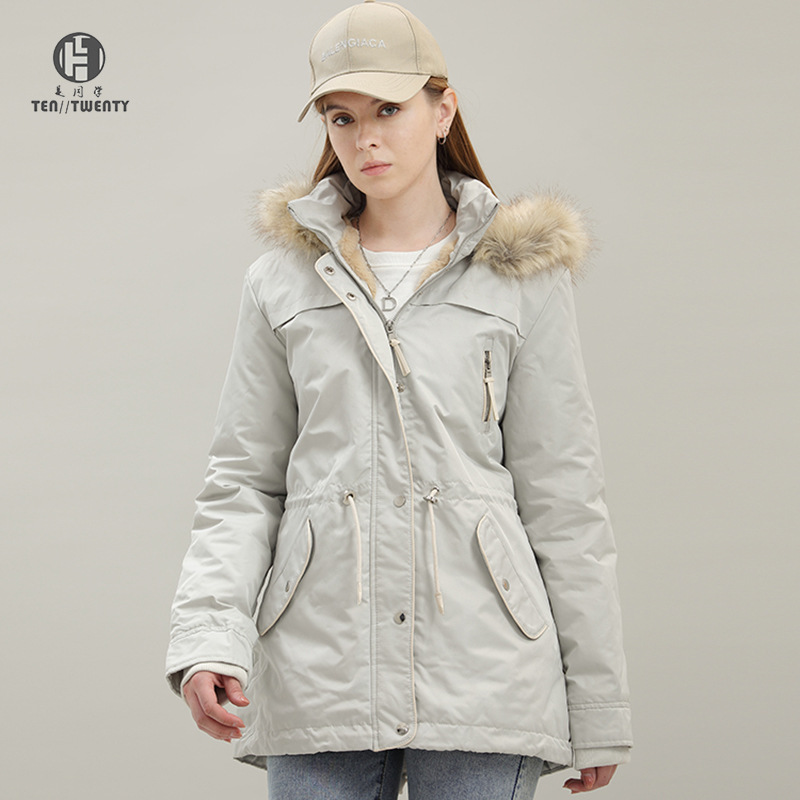
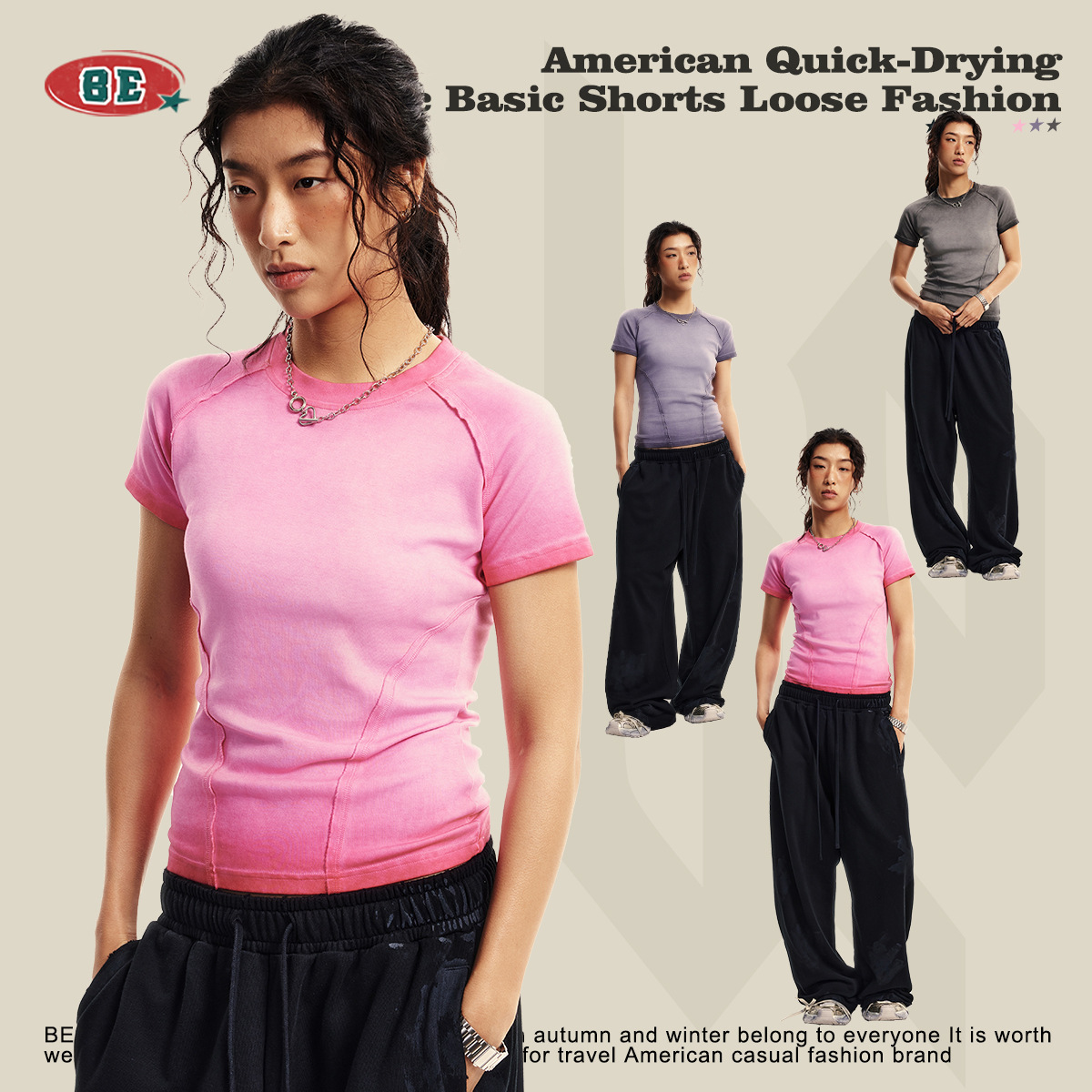
The former catalog reportedly included women's and men's fashion, casual basics, dresses, tops, outerwear, sportswear, accessories and other general merchandise. Availability changed frequently, and Chinabrands was not a single factory. Two visually similar garments could therefore come from different upstream suppliers, with different fabric weight, measurements, stitching and color consistency.
There are no valid Chinabrands clothing prices for 2026. Old references to low wholesale prices, VIP discounts, points or no minimum order quantity describe a historical commercial model. They are not offers that a buyer can accept today. Even when it operated, the product price was only one cost component: international freight, payment fees, import duty, VAT or sales tax, customs clearance, local delivery, defects and returns determined the real landed cost.
The platform historically targeted dropshippers, marketplace sellers and small online retailers serving multiple countries. It was not the best fit for brands needing exclusive patterns, stable fabric lots, audited factories, controlled dyeing, compliance documentation or repeat production to an approved specification.
4. Historical advantages and disadvantages
| Aspect | Historical advantage | Limitation or risk |
|---|---|---|
| Entry level | Low-quantity testing and single-order fulfillment were attractive to beginners. | Low MOQ did not guarantee stable supply or consistent production lots. |
| Catalog | Many clothing and general-merchandise SKUs in one place. | A broad catalog made supplier-level traceability and uniform quality harder. |
| Fulfillment | Direct dispatch reduced the need to hold stock. | The seller had limited control over packing, stock accuracy and last-mile delivery. |
| International reach | Several shipping methods and international customers. | Transit time, tracking and customs experience varied by route. |
| Current status | None for new purchases. | The platform is offline, making every former benefit unavailable. |
5. User reviews and reliability
There is no honest single sentence that represents every past buyer. Earlier positive commentary focused on product range, accessible order sizes and dropshipping convenience. Later negative review patterns described delayed deliveries, weak support, customs declaration problems and difficulty recovering account balances. AliDropship's 2026 review characterizes the former business as legitimate but closed, while EPROLO describes a period of service deterioration before the site became inaccessible.
An additional warning appeared before the eventual shutdown: ShopMaster announced in 2020 that it would discontinue its Chinabrands integration following a supplier-quality assessment. That notice does not prove that every transaction failed, but it is a meaningful historical signal that service concerns were not limited to the final days.
Our assessment is therefore nuanced: Chinabrands was a real operating platform, not merely a fabricated storefront, but it should not be considered reliable or usable for a new transaction today. Anonymous ratings, affiliate reviews and old promotional pages should never override live operational verification.
6. Shipping, returns and after-sales service
Historical guides described postal delivery, standard express and expedited courier options, sometimes with shipping insurance. Actual cost and transit time depended on destination, parcel weight, product category and route. Returns and compensation were governed by the platform's then-current rules and required evidence.
Those services are not available as a dependable 2026 offer. A dormant policy page is not enforceable customer service. If you have an unresolved historical order or wallet balance, preserve invoices, payment records, emails, tracking data and screenshots; contact the original card issuer, payment provider or bank about any applicable dispute route; and obtain local legal advice if the value justifies it. Be cautious of strangers demanding an advance fee to “recover” frozen funds.
7. Can you buy from Chinabrands today?
No responsible guide can provide a current Chinabrands registration-to-checkout tutorial. There is no verified active checkout, live app download, official current support desk or safe payment flow. Do not transfer funds to a person who claims to be a Chinabrands representative solely through WhatsApp, Telegram, social media or a look-alike domain.
If an old listing interests you, treat its image as inspiration only. Reverse-search the photo, prepare a technical specification, and locate an active manufacturer or wholesaler. Do not assume the original brand name, fabric, construction or authorization carries over to a visually similar listing.
8. Current alternatives by business model
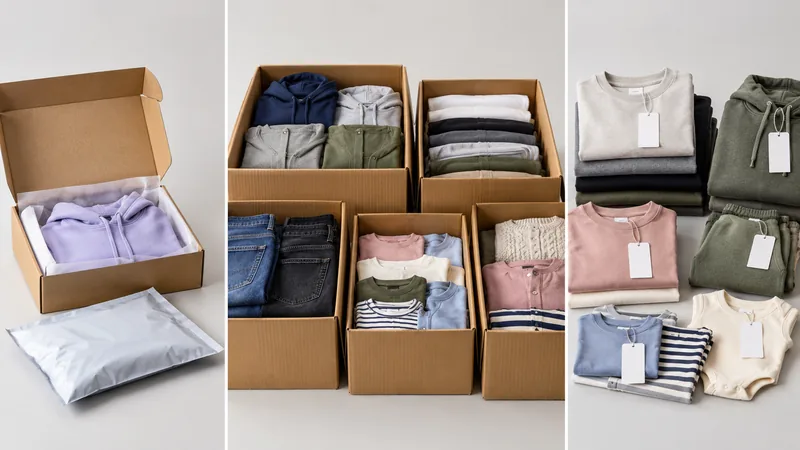
| Model | Best for | Main trade-off |
|---|---|---|
| Dropshipping | Demand tests without holding stock | Lower control and often weaker margin; verify the platform is active before funding it. |
| Ready-stock wholesale | Boutiques and resellers buying cartons or mixed styles | Requires inventory planning, consolidation and import clearance. |
| Private label / OEM | Brands needing custom fit, labels and repeatability | Higher MOQ, sampling cost and development lead time. |
International buyers can compare Alibaba, 1688 through a qualified purchasing service, specialist garment suppliers and physical clothing markets in Guangzhou. For Latin American importers who need Chinese-language sourcing, order consolidation and quality coordination, Chilatshop is a relevant option to evaluate. Its service scope, fees, MOQ, inspection level and route must still be confirmed for each order; no agent replaces the importer's compliance responsibility.
Useful Chilat references include the guide to buying Chinese wholesale clothing, the wholesale clothing sourcing page, and this supplier-selection guide.
9. How to buy and import clothing from China now
- Define the model and destination. Specify whether you need dropshipping, ready stock or OEM, then check the destination country's importer registration, textile labeling, tariff and product-safety rules.
- Build a product specification. Include fabric composition, GSM, construction, colors, tolerances, size chart, label language, packaging, quantity by size and acceptable quality level.
- Shortlist active suppliers. Verify business registration, export experience, factory or trader status, address, bank-beneficiary match and recent production evidence.
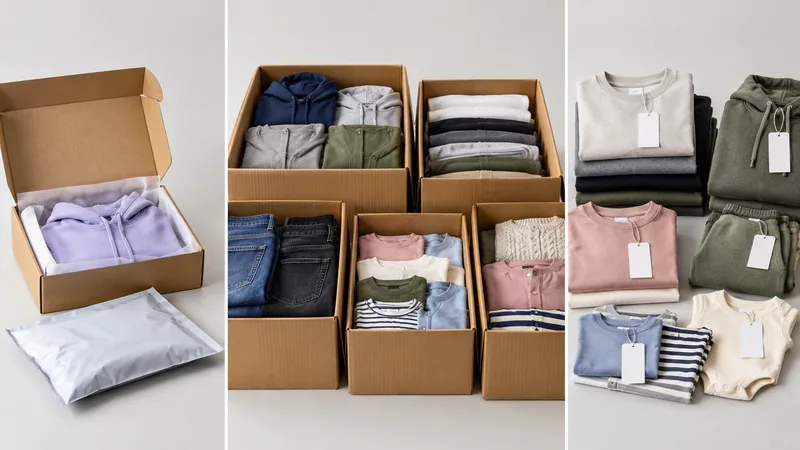
- Order samples. Test fit, measurements, shrinkage after washing, colorfastness, pilling, seam strength, odor, trims and packaging. A showroom sample is not automatically the bulk standard; seal an approved reference.
- Calculate landed cost. Add unit cost, labels, packaging, China domestic freight, inspection, consolidation, export charges, international freight, insurance, duty, tax, brokerage, storage and local delivery.
- Issue a precise purchase order. State Incoterm, quantities, specifications, quality criteria, defect remedies, production deadline, inspection right and payment milestones.
- Inspect before final payment. Use pre-production checks for critical materials, during-production checks when risk is high, and a final random inspection before release.
- Ship with correct documents. Common documents include the commercial invoice, packing list, transport document, certificate of origin when relevant, and product-specific records required by the destination.
- Clear and receive. Your customs broker classifies goods and files the declaration. Count cartons, record damage on receipt and quarantine nonconforming stock before sale.
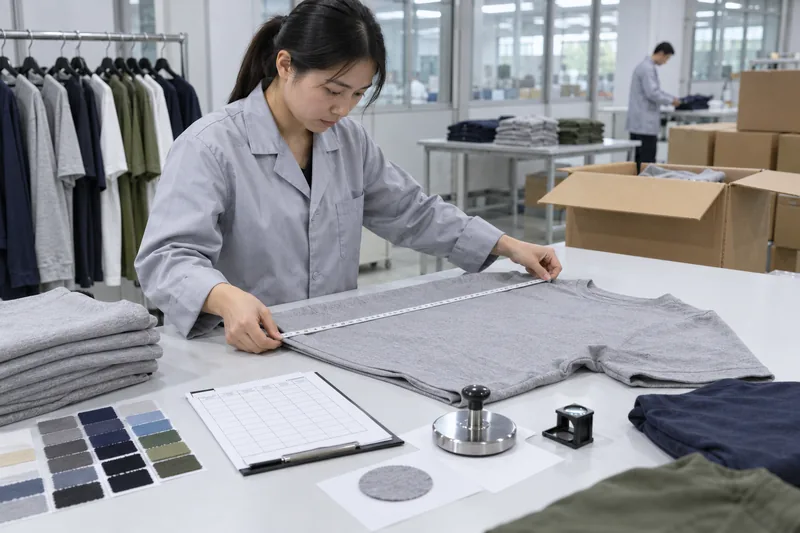
10. Clothing supplier and quality-control checklist
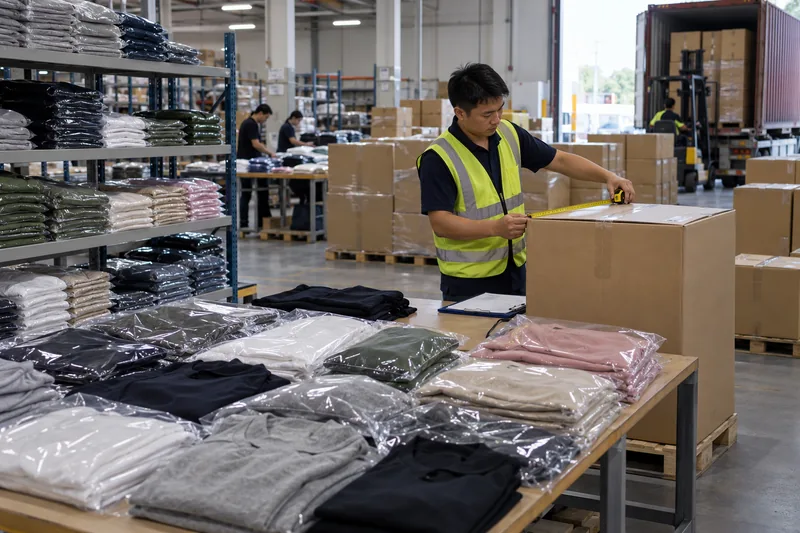
Supplier evidence to request
- Legal company name, business license, factory address and bank account in the contracting entity's name.
- Production-line video or an independent audit covering capacity, subcontracting and social-compliance requirements.
- Recent export references for comparable products and target markets, without relying on unverifiable logos.
- Material certificates or laboratory reports tied to the exact fabric and lot when regulation or brand policy requires them.
What the inspection should measure
- Measurements by size, grading, fabric weight and fiber composition.
- Workmanship: skipped stitches, seam allowance, tension, symmetry, stains, holes and loose threads.
- Performance: wash shrinkage, dry/wet rubbing colorfastness, pilling and print or embellishment adhesion.
- Labels, barcode, country of origin, care instructions, polybag warnings and carton markings for the destination market.
AQL sampling is a decision tool, not a guarantee that every unit is perfect. Define critical, major and minor defects in writing, and combine statistical inspection with laboratory tests for safety or performance claims.
11. Risks and precautions
- Impersonation: verify domain ownership, legal entity and beneficiary details independently.
- Counterfeit goods: never assume a supplier is authorized to sell a famous logo; request authorization or buy unbranded/private-label goods.
- Size mismatch: approve a measurement chart in centimeters with tolerances, not “S/M/L” alone.
- Misleading fabric claims: tie test reports to the exact purchase-order material and batch.
- Unexpected landed cost: obtain a broker-reviewed HS classification and a written freight quotation with exclusions.
- Chargeback illusion: buyer protection has deadlines and evidence requirements; it does not replace due diligence.
- Over-ordering trends: test a small but economically shippable batch and replenish from a supplier that can reproduce the same specification.
12. Frequently asked questions
Is Chinabrands.com clothing legit?
It was a real wholesale and dropshipping operation. However, the website is now offline and should not be used for a new purchase. “Previously legitimate” does not mean “currently operational.”
Does Chinabrands have a working app or English website?
No verified active app or functional English purchasing site was found in October 2026. Avoid unofficial APK files and look-alike domains.
What happened to Chinabrands?
Independent industry sources report that service quality deteriorated and the platform went offline around 2024. No clear, accessible official closure explanation was found, so claims about the exact cause should be treated cautiously.
Can I recover an old wallet balance?
There is no guaranteed recovery path. Preserve proof, contact the original payment provider and seek jurisdiction-specific advice. Do not pay unverified “recovery agents.”
What is the safest Chinabrands alternative for clothing?
There is no universal replacement. Use an active dropshipping provider for demand tests, a verified wholesaler for ready stock, or an audited factory for private label. The safest choice is the one whose legal identity, samples, contract, inspection and payment protections you can verify.
Do I need a China sourcing agent?
Not always. An agent is valuable when you buy from domestic Chinese platforms, combine suppliers, need Chinese-language negotiation or require local inspection. Ask for a transparent fee schedule, custody rules and conflict-of-interest disclosure.
13. Conclusion
Chinabrands clothing belongs to ecommerce history, not to a 2026 supplier shortlist. It once offered a broad catalog and low-barrier fulfillment, but the domain is offline and its old prices, inventory, delivery promises and after-sales terms are no longer actionable. The commercially sound response is not to search for a hidden checkout; it is to rebuild the purchase around an active supplier, a measurable garment specification, independent quality control and a complete landed-cost calculation.
14. Sources and verification notes
This article separates current checks from historical claims. Sources were accessed in October 2026:
- AliDropship: Chinabrands legitimacy and shutdown review — secondary industry analysis and review-pattern summary.
- EPROLO: Chinabrands status and historical workflow — competitor source, used cautiously.
- SaaSHub service-status page — availability signal, not evidence of the cause of closure.
- Avada historical Chinabrands review — used only for former features and shipping methods.
- ShopMaster 2020 discontinuation notice — historical integration decision.
Editorial note: Platform status, prices and regulations can change. Verify the supplier, shipping route and destination-country requirements before paying.