'%3e%3cpath%20id='Vector'%20d='M0.775%206.60234L3.375%204.00234L0.775%201.40234'%20stroke='%23F2F2F2'%20stroke-linecap='round'%20stroke-linejoin='round'/%3e%3c/g%3e%3cdefs%3e%3cclipPath%20id='clip0_13602_6886'%3e%3crect%20width='4'%20height='6.4'%20fill='white'%20transform='matrix(-1%200%200%201%204.07812%200.800781)'/%3e%3c/clipPath%3e%3c/defs%3e%3c/svg%3e)
 12,433
Canton Fair 2026 Autumn Schedule: Dates, Registration, Travel and Buyer Guide
The Canton Fair 2026 autumn schedule is now official. The 140th China Import and Export Fair will run in Guangzhou in three five-day phases: October 15–19, October 23–27, and October 31–November 4, 2026. Each phase covers different industries, so the right travel dates depend on what you want to source—not on how long you can stay.
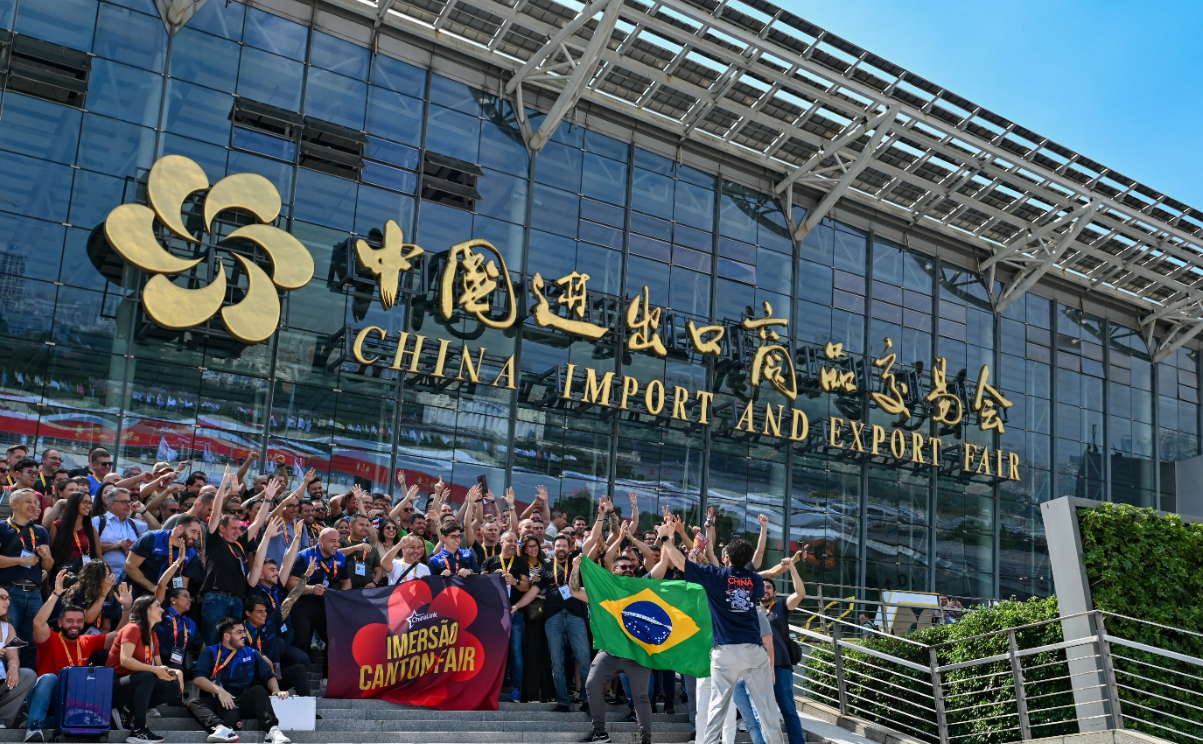
This guide turns the official dates into a workable buyer plan: which phase to attend, how overseas buyer registration works, when to arrive, where to stay, how to reach each exhibition area, and what to do before signing with a supplier. Details that can still change, such as the final 140th hall map and off-site badge counters, are clearly identified.

Canton Fair Autumn 2026 dates at a glance
| Phase | Official dates | Main sourcing focus | Recommended arrival |
|---|---|---|---|
| Phase 1 | October 15–19, 2026 | Electronics, machinery, vehicles, electrical products, hardware and tools | October 13 or 14 |
| Phase 2 | October 23–27, 2026 | Housewares, gifts, furniture, building and decorative materials | October 21 or 22 |
| Phase 3 | October 31–November 4, 2026 | Fashion, textiles, toys, health, food, personal care and pet products | October 29 or 30 |
The official daily opening time is generally 9:30 a.m. to 6:00 p.m. The venue is the China Import and Export Fair Complex, 382 Yuejiang Zhong Road, Haizhu District, Guangzhou. All three phases use this Pazhou complex; “phase” describes a change of exhibitors and product sections, not a different venue.
If you attend two consecutive phases, the changeover gaps are October 20–22 and October 28–30. These are useful days for factory visits, wholesale-market research, sample consolidation or supplier meetings. Do not book all three phases unless your sourcing brief genuinely spans all three product groups.
What is exhibited in Phase 1, Phase 2 and Phase 3?

Phase 1: technology, manufacturing and mobility
Phase 1 is the industrial and technology-heavy session. Its established sections include household appliances, consumer electronics and information products; industrial automation, processing machinery, power and electrical equipment, general machinery, construction and agricultural machinery; vehicles, new-energy and smart mobility, auto parts, motorcycles and bicycles; lighting, new energy, hardware and tools.
It best suits importers of equipment, distributors of electrical products, hardware chains, renewable-energy buyers and companies developing private-label electronics. Technical buyers should bring a written specification sheet. Ask for rated voltage and plug configuration, applicable certifications, component brand, spare-parts policy, firmware or app support, warranty boundaries and a sample of the final packaging.
Phase 2: home, gifts, construction and furniture
Phase 2 focuses on ceramics, kitchenware, tableware and household goods; glassware, home decorations, gardening products, festival items, gifts and premiums, art ceramics, weaving and rattan products; building and decorative materials, sanitary and bathroom equipment, furniture, stone and outdoor spa equipment.
This phase is productive for retailers, hospitality buyers, promotional-product distributors, interior projects and construction-material importers. For fragile or bulky products, the unit price is only part of the decision. Compare export-carton strength, drop-test practice, palletization, cubic volume, replacement allowance for breakage and whether mixed models can share one shipment.
Phase 3: fashion, children, health and consumer goods
Phase 3 covers men’s and women’s clothing, underwear, sports and casual wear, leather and down products, fashion accessories, fabrics, shoes, cases and bags, home textiles and carpets; toys, children’s clothing and baby/maternity products; office supplies, medicines, health and medical devices, food, sports and recreation, personal care, toiletries and pet products.
It is a strong fit for e-commerce sellers, apparel brands, beauty and wellness distributors, toy buyers and supermarkets. Regulated categories require extra work: verify destination-country labeling, ingredient or material documentation, age grading, test reports and importer obligations before paying a deposit. A certificate shown at a booth is not proof that your exact SKU, material and production batch are covered.
Important: the phase structure above comes from the fair’s established official category plan. The organizer can adjust individual sections and halls. Download the final 140th section map and search each exhibitor in the official platform before fixing appointments.
How overseas buyers register and obtain a badge

Overseas buyers normally enter with a Buyer Badge, not a consumer admission ticket. Pre-registration is available year-round through the official Buyer Service System. Complete it early; a submitted application is easier to correct from home than at a crowded counter on opening morning.
- Open the official Buyer Service System and create an account, or recover an existing buyer profile.
- Choose Canton Fair Badges, Overseas Buyer Badge and Badge Application.
- Complete personal and company information exactly as shown in your travel document. Upload the requested materials and a compliant photo.
- If needed, request an official invitation letter in the same system. It can support a Chinese visa application, but it is not a visa and does not guarantee approval.
- Save the pre-registration receipt and confirmation. Review the 140th session notice for the available collection point and opening hours.
- Collect the physical badge with your original valid identification, pre-registration receipt and business card. Keep an old valid buyer badge: badges are generally reusable across sessions.
Official guidance has previously offered badge collection at the complex and selected alternative registration offices, including transport hubs and designated hotels. The precise 140th list can change, so use only the locations published for autumn 2026. Collecting before the first fair morning often saves significant queue time. Visitors under 18 cannot use the invitation workflow as ordinary overseas buyers.
When should you arrive in Guangzhou?
A first-time international buyer should arrive one or two full days before the selected phase. That buffer covers a delayed flight, hotel check-in, connectivity and payment setup, badge collection and the trip to Pazhou. If you already hold a valid badge and know Guangzhou, arriving the previous afternoon may work, but one full buffer day remains safer.
On your first exhibition day, aim to reach the correct entrance 30–45 minutes before opening. The complex is enormous; a wrong metro exit or hall can consume a valuable meeting slot. Avoid scheduling a critical supplier appointment immediately after a long-haul arrival.
For visa planning, start as soon as your itinerary and passport validity are clear. Requirements vary by nationality and place of application. Consult the relevant Chinese embassy or consulate; do not rely on a supplier, agent or old blog post as the final authority.
Transport to the Canton Fair Complex
Metro: usually the most predictable option
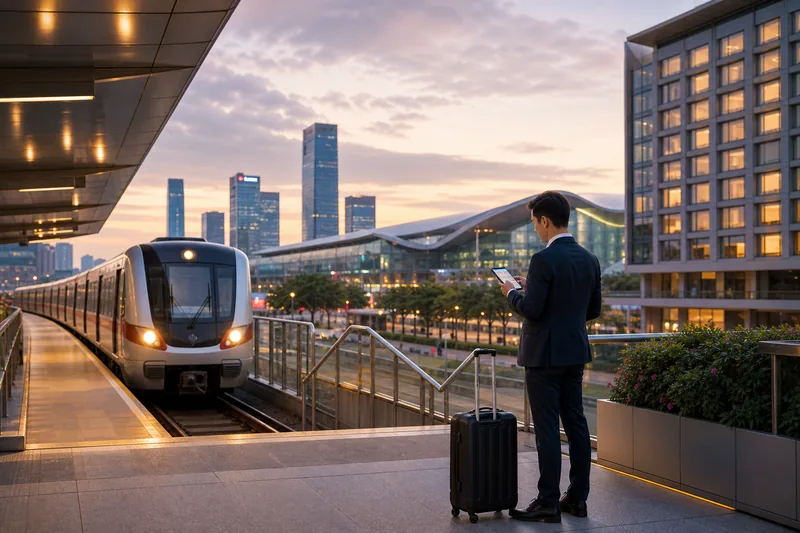
Metro Line 8 serves Xingangdong and Pazhou stations; Line 11 also serves Pazhou. Official access guidance associates Xingangdong Exit A with Areas A and D, Pazhou Line 8 Exits A/B with Area B and Exit C with Area C, while Line 11 Pazhou Exits E/F serve Area B. Always compare this with the final hall map because your ideal station depends on the booth location.
From Guangzhou South Railway Station, a common route is Line 2 to Changgang and then Line 8. From Guangzhou Baiyun International Airport, allow roughly 60–90 minutes door to door when transfers, walking and queues are included. Use the current metro planner rather than assuming a historic journey time.
Guangzhou’s official 2026 visitor guidance says the metro accepts major international bank-card networks and that selected stations, including Pazhou-area stations, provide relevant payment support. Still carry a backup card and some RMB, because a foreign card, phone or app can fail at the least convenient moment.
Taxi, ride-hailing and Hong Kong connections
Taxis and ride-hailing are useful with samples or a small team, but road congestion and pickup controls can make them slower at closing time. Set the exact exhibition area or nearby landmark, not simply “Canton Fair.” Pazhou Ferry Terminal can be useful for some Hong Kong routes; verify the autumn timetable, immigration process and baggage conditions before booking a flight connection around it.
Where to stay and when to book
| Area | Best for | Trade-off |
|---|---|---|
| Pazhou / Haizhu near the complex | Maximum convenience, early meetings, buyers carrying samples | Highest fair-period demand and limited value options |
| Along Metro Line 8 or Line 11 | Balance of price and predictable commute | Quality depends on the exact station and walking distance |
| Tianhe | Business dining, city services and after-fair meetings | Longer commute; transfers may be needed |
| Yuexiu | More city atmosphere and varied accommodation | Less convenient for repeated daily trips to Pazhou |
As practical planning—not an organizer rule—reserve a refundable room 8–12 weeks ahead. For a walkable hotel, a group booking or the opening days of a phase, three to five months is safer. Compare total travel time to the correct hall, not just kilometers on a map. The official Canton Fair travel and hotel platform is one reference, but compare cancellation terms and breakfast hours across channels.
Ask the hotel whether it will operate a verified overseas-buyer registration counter for the 140th session; never assume a hotel that offered the service in a previous session will do so again. Also confirm late arrival, deposit method, invoice needs and walking distance from the nearest metro exit.
A practical participation workflow
Four to twelve weeks before
- Define the product, target cost, required standards, forecast quantity and acceptable MOQ.
- Register, request an invitation if required, arrange visa and travel insurance, and book flexible transport and accommodation.
- Use the official exhibitor/product search to build an A-list and B-list. Group booths by area and hall.
- Send a concise RFQ before the fair. Book 20–30 minute meetings and leave walking buffers.
- Prepare a bilingual specification sheet, packaging reference and supplier scorecard.
At each booth
Record the booth number, company’s exact legal/export name, salesperson, product code, MOQ, EXW/FOB price, tooling, sample cost, lead time, packaging, certification scope and payment terms. Ask whether the exhibitor is the factory, a trading company or an integrated manufacturer/exporter—and what work is subcontracted. Photograph only with permission, and attach every photo to the corresponding supplier record before leaving the hall.
After the fair
Shortlist suppliers with evidence, not booth appearance. Verify business registration, request samples, check bank-beneficiary consistency and audit production where the risk justifies it. Approve a golden sample and written specifications before mass production; set inspection criteria and remedies in the purchase agreement.
Latin American buyers who need Chinese-language negotiation, multi-supplier consolidation or pre-shipment inspection can use Chilatshop as a sourcing workflow after the fair. It should complement—not replace—your own compliance, landed-cost and market checks. Our related guides explain how to assess whether a Chinese supplier is reliable and how consolidation and shipping to Latin America work.
Common mistakes that waste a Canton Fair trip
- Choosing by date instead of product: the same venue hosts different suppliers in each phase.
- Collecting the badge on opening morning: possible, but it risks losing prime sourcing hours.
- Booking meetings back to back: hall changes, security and conversations make the plan collapse.
- Treating a booth as due diligence: exhibition acceptance does not guarantee that every claim, certificate or bank account is valid for your order.
- Comparing only unit price: tooling, packaging, testing, inland freight, inspection, international freight, duty and defects determine landed cost.
- Paying from a casual quotation: insist on a formal pro forma invoice and confirm the beneficiary through a known channel.
- Ignoring destination compliance: attractive products can become unsellable if labels, safety documents or registrations are missing.
Frequently asked questions
Is the Canton Fair 2026 autumn session the 140th Canton Fair?
Yes. The official 2026 attendance guide identifies the autumn edition as the 140th session.
Do I need a ticket?
Overseas trade visitors normally use an Overseas Buyer Badge rather than a standard consumer ticket. Pre-register in the official system and review the 140th badge notice before travel.
Can I attend more than one phase with the same badge?
A valid buyer badge is generally reusable, including across phases. Keep it secure and verify its status in your buyer account.
Is the invitation letter enough to enter China?
No. It is supporting material only. Visa and entry decisions belong to the competent Chinese authorities, and rules depend on nationality and circumstances.
Which phase is best for first-time e-commerce sellers?
There is no universal best phase. Phase 2 offers many home and gift products; Phase 3 offers fashion, bags, toys, personal care and pet goods. Choose only after checking compliance, landed cost, differentiation and realistic demand.
Can I buy small quantities at the fair?
You can negotiate samples and trial orders, but the fair is B2B and many exhibitors quote production MOQs. Ask for stock products, mixed colors, shared materials or a staged order; do not expect retail purchasing.
How many days should I spend in one phase?
Two to three focused days can cover a narrow category. A broad sourcing program may need all five days plus a pre-arrival day. The number of qualified meetings—not the size of the fair—should drive the plan.
Conclusion
The correct Canton Fair 2026 autumn plan starts with the phase: October 15–19 for technology and manufacturing, October 23–27 for home, gifts and construction, or October 31–November 4 for fashion and consumer categories. Register early, arrive one or two days ahead, stay on a practical metro route, and turn every booth conversation into a documented supplier-evaluation process. Recheck the official 140th notices shortly before departure, especially hall assignments, badge counters and transport operations.
Sources
- Canton Fair: 2026 Overseas Buyer Attendance Guide and official dates
- Canton Fair official general information, venue, hours and product structure
- Official overseas buyer registration and invitation guide
- Official buyer badge document and collection reminder
- Guangzhou government 2026 Canton Fair metro guidance